
Landscaping across Latvia
Levels, surface water drainage, lawn and planting. We finish the ground around the paving so the whole site reads as one piece.
What landscaping covers
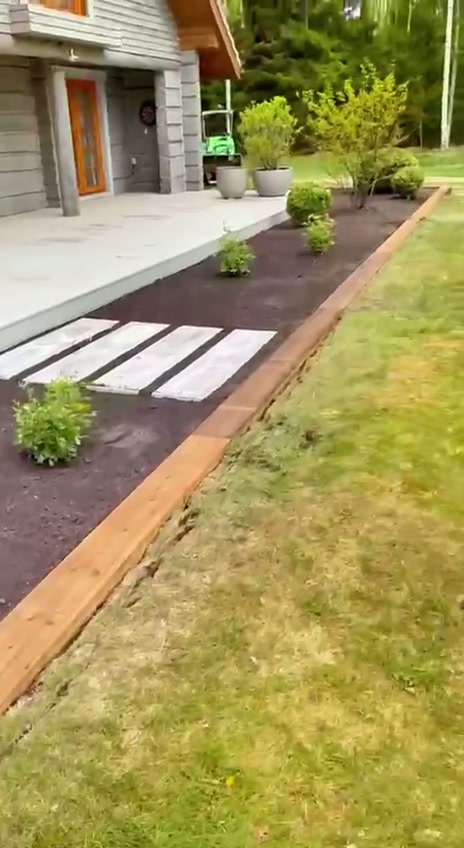
Landscaping is everything around the paving and between the buildings: shaping levels, surface water drainage, preparing lawn, planting beds, planting zones and crushed stone strips along house foundations. These are often the works that decide whether a property looks finished or merely built.
Most of our sites combine both: the paving goes in first, then the rest of the ground is put right. Landscaping can also be ordered on its own, for example where the surface already exists and the problems are water, uneven levels or a lawn that will not establish.
We work on private properties as well as apartment block and commercial sites, where pedestrian flow and machine access have to be planned around.
What decides the result
Attractive planting can be put on any site. Whether it lasts is decided by what sits underneath it.
Levels
Before any work we assess the height points and which way the ground falls. If the levels are wrong, water collects in the low spots, the lawn there drowns, and planting fails to establish. Shaping levels is the cheapest stage while the site is still open, and the most expensive to return to a year later.
Surface water
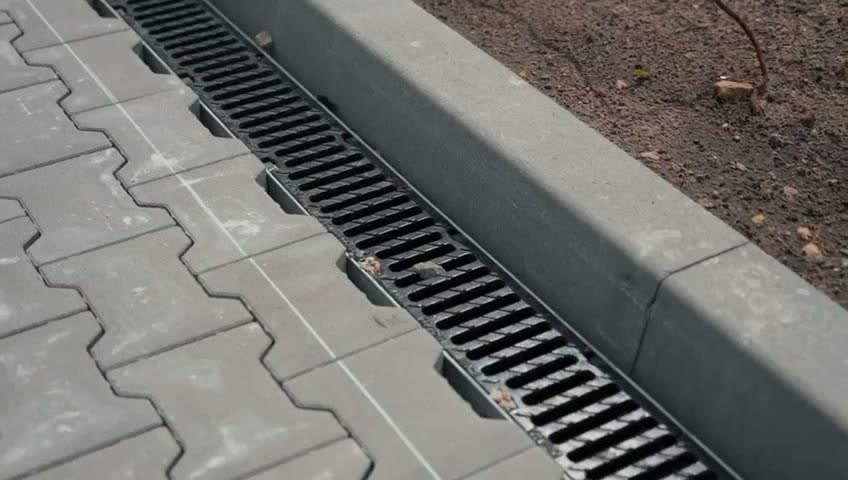
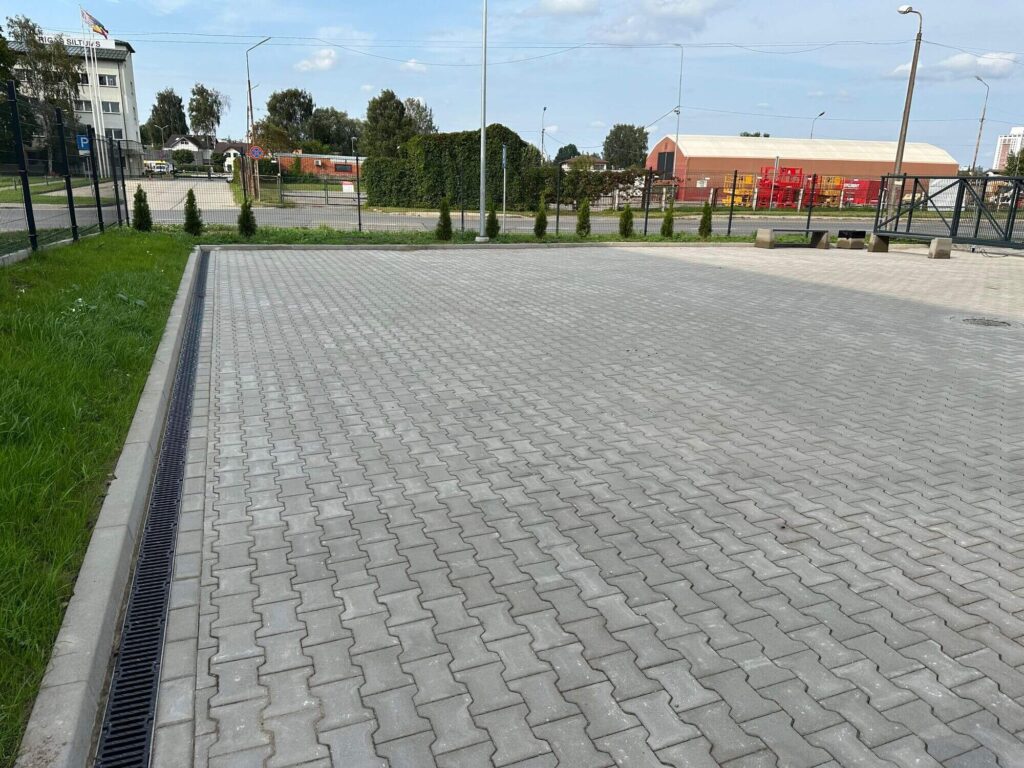
Rainwater has to find a way away from the foundations. Depending on the site we solve it with falls, drainage channels, crushed stone strips along the foundations, or linear drainage. This is the most common problem we are called to on sites that are already built.
Soil and lawn
We prepare and level the topsoil before seeding or laying turf. On unprepared ground a seeded lawn comes up unevenly and thins out in the first dry summer. Turf costs more but is usable almost immediately.
How the work runs
1. Survey
We come out to the site and assess the levels, the ground conditions and where the rainwater currently goes.
2. Earthworks
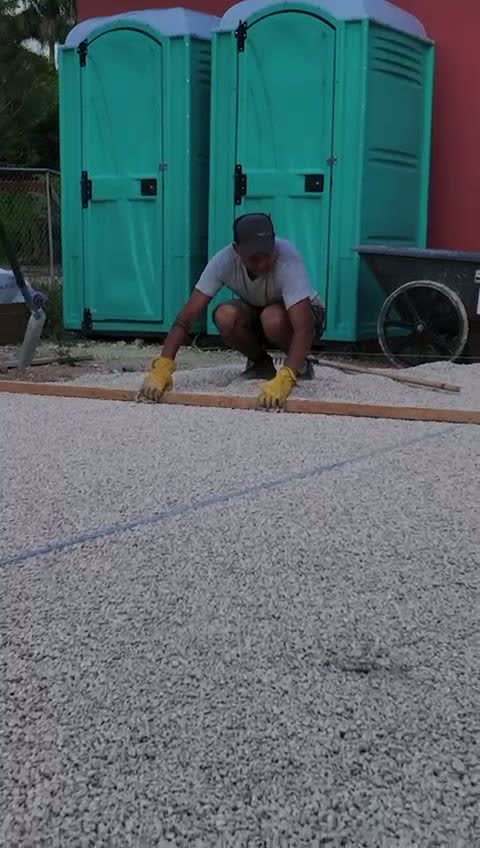
We strip or move soil, form the falls that are needed, and prepare the base for any surfaces.
3. Drainage
We build drainage, channels or crushed stone strips while the site is still open.
4. Surfaces and edging
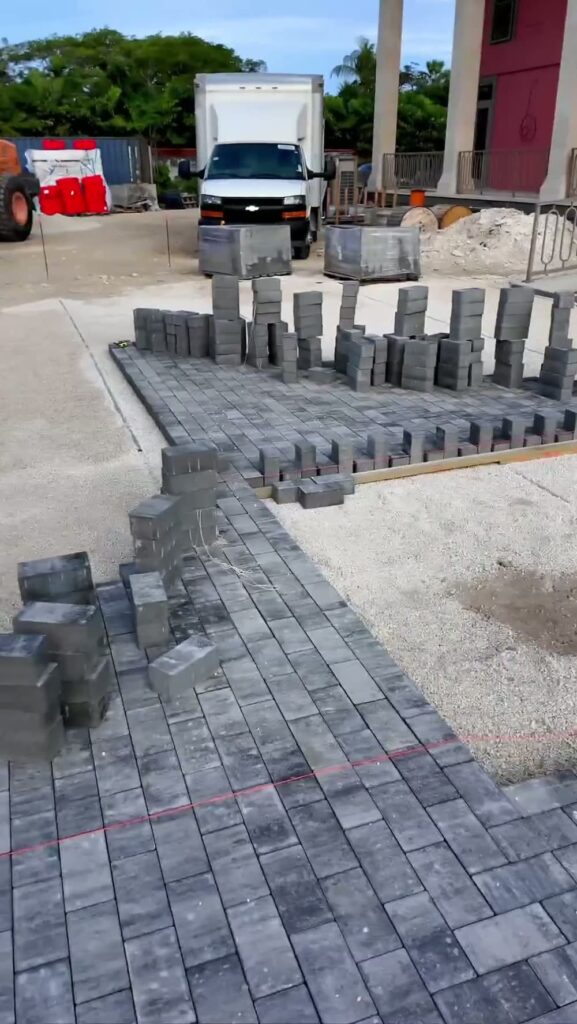
We lay paving, concrete slabs or a timber deck, and close the edges with kerbs.
5. Soil and planting
We bring in topsoil, establish the lawn and form the planting beds.
6. Handover
We tidy the site and go through how to look after the new lawn and planting through the first season.
Additional elements
Gabions
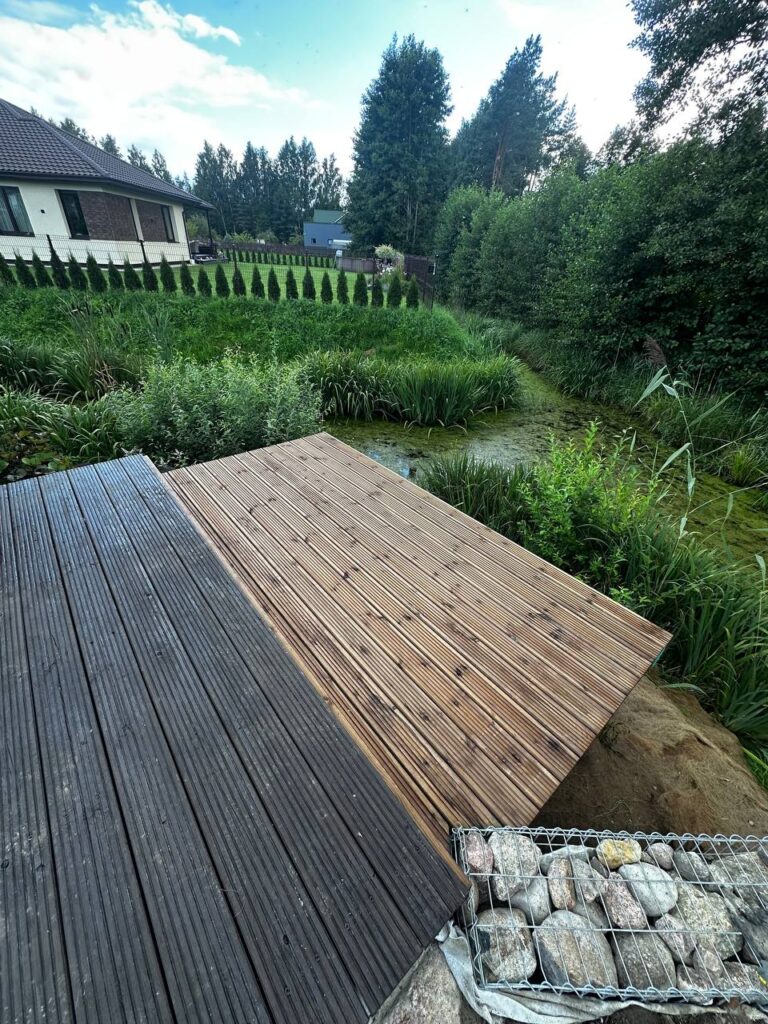
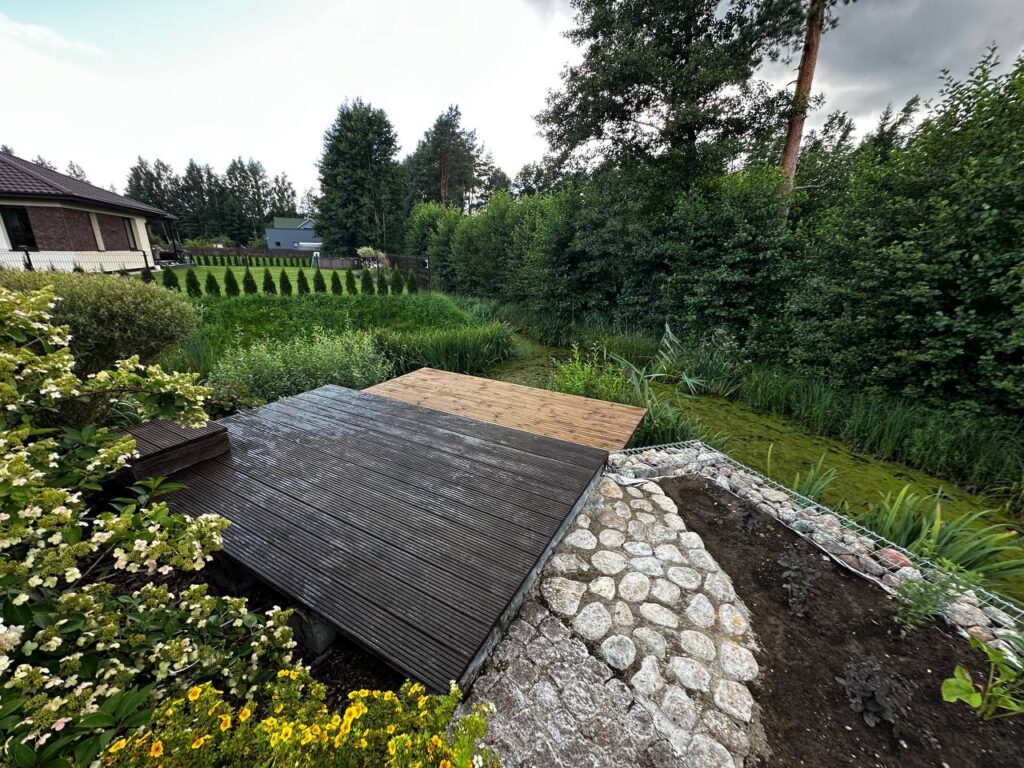
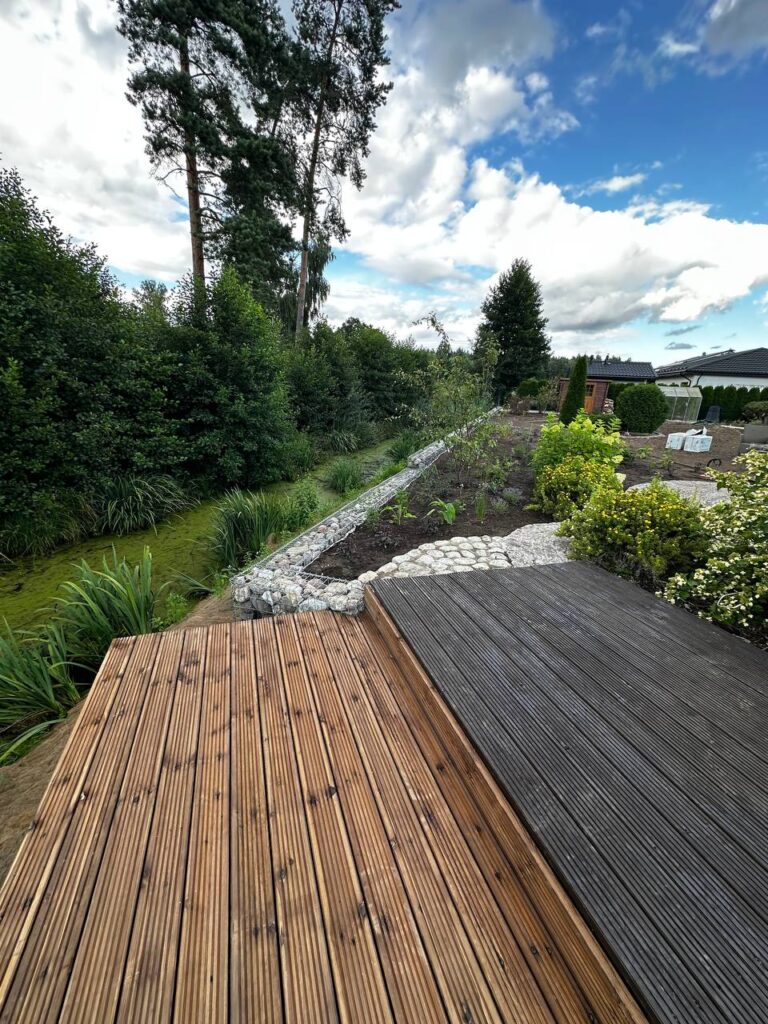
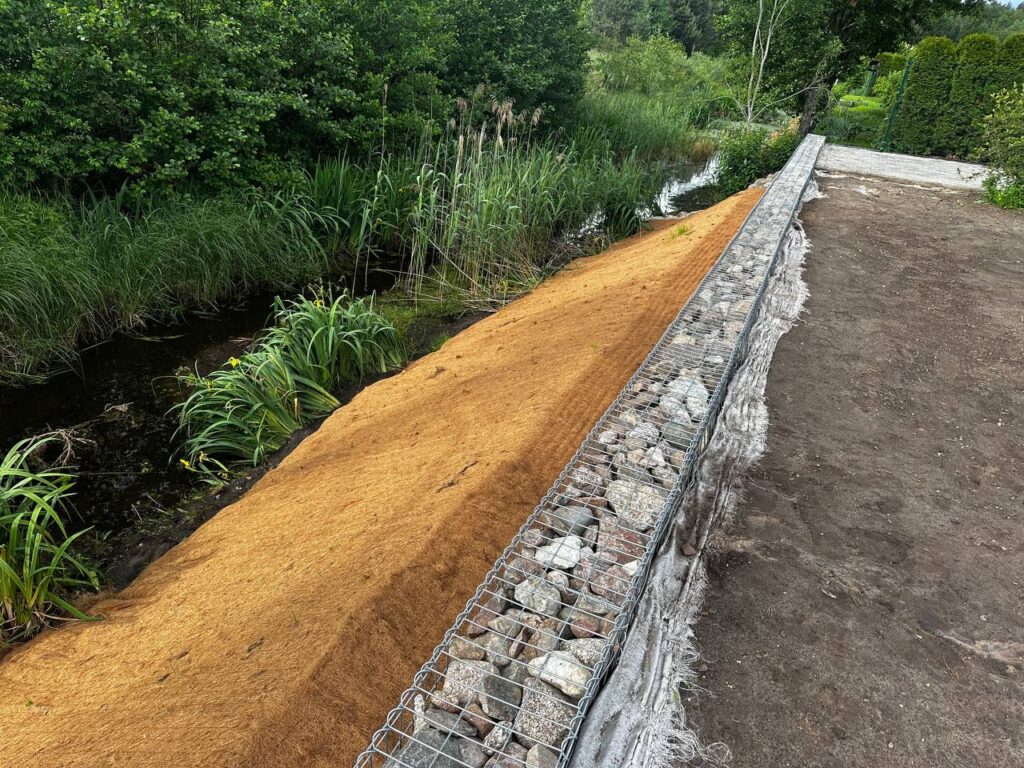
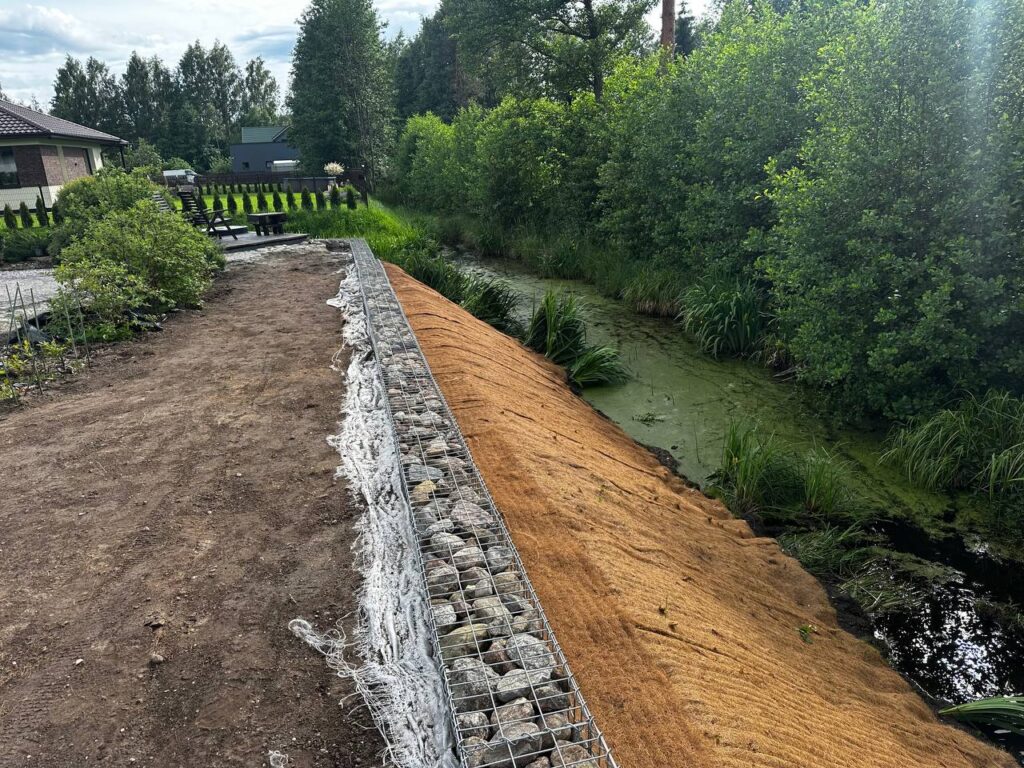
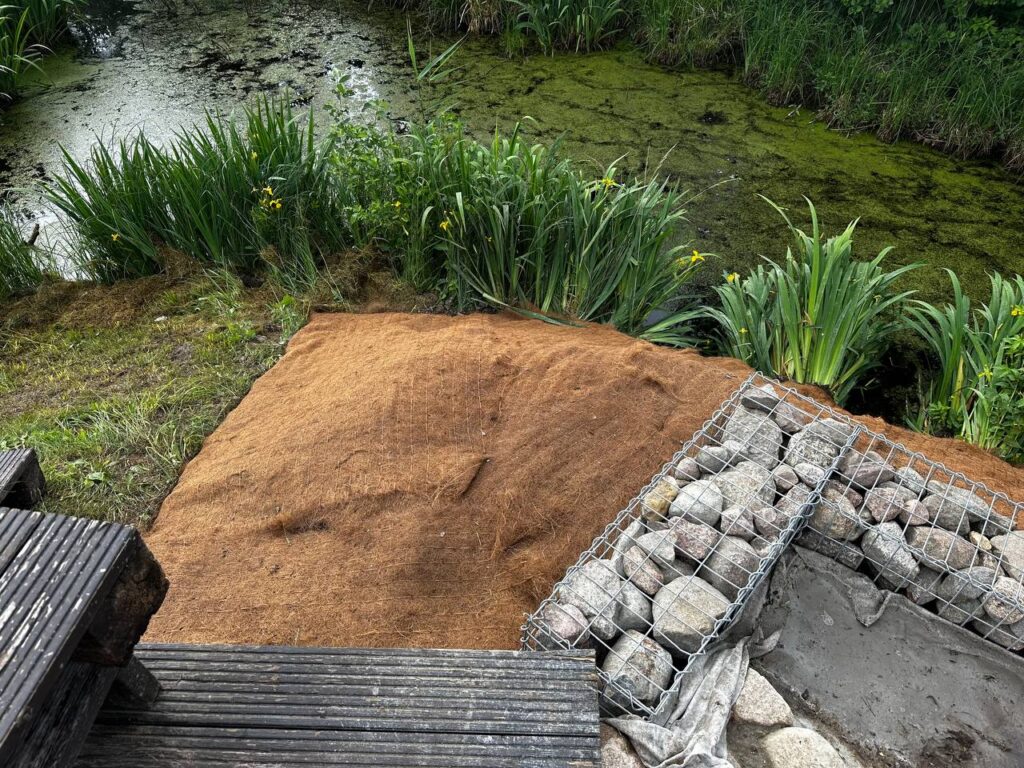
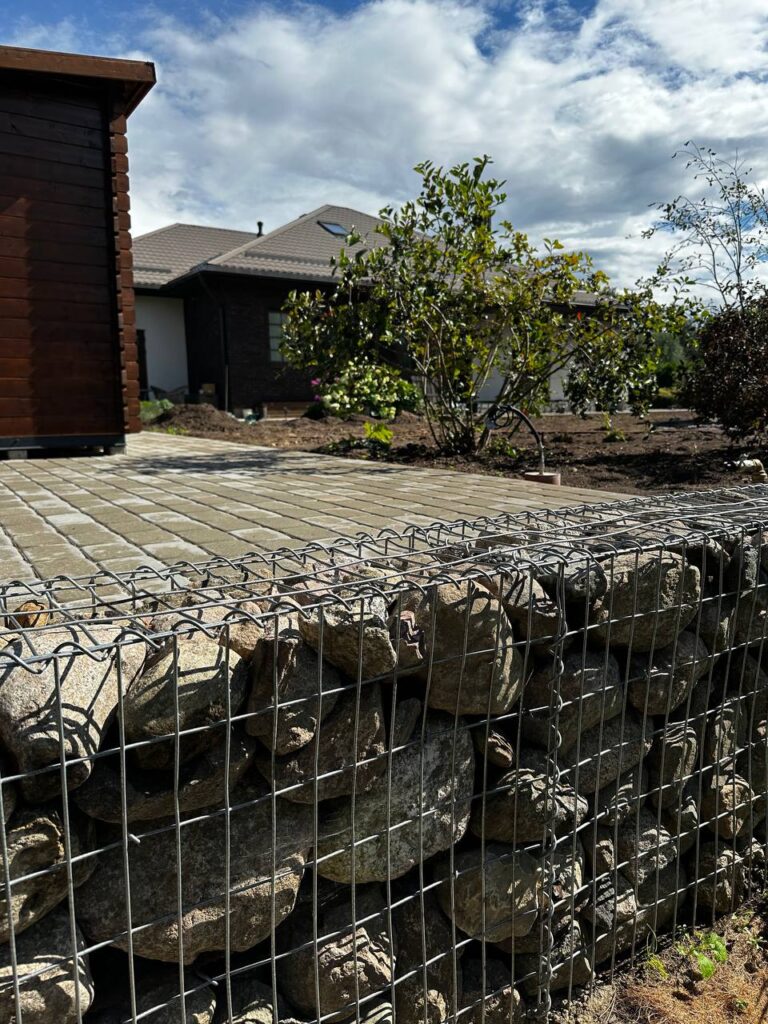
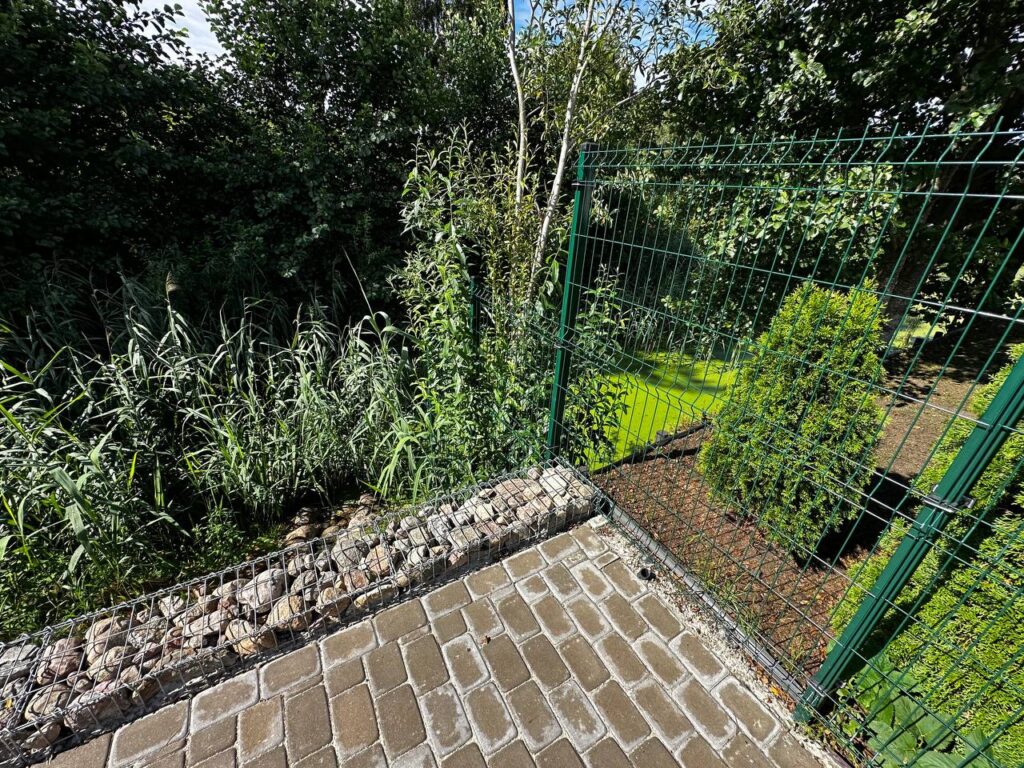
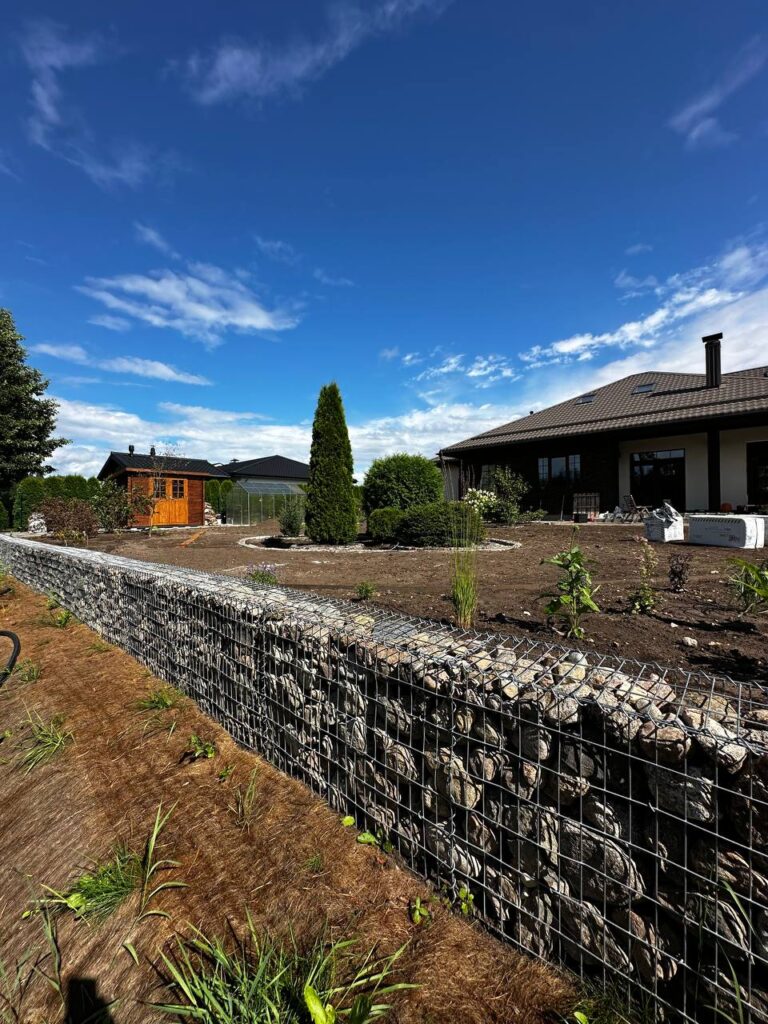
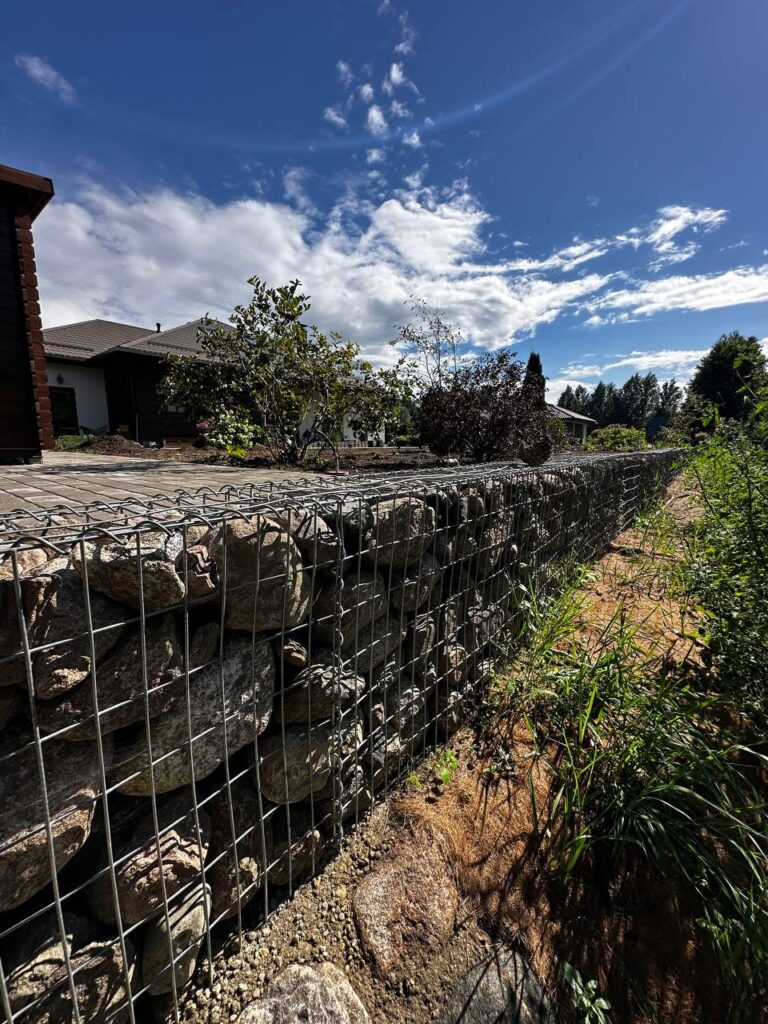
Steel baskets filled with stone that hold a slope while reading as a stone wall. We use them for retaining walls, boundary structures and bank reinforcement beside ponds and ditches, where an ordinary fence would not take the pressure of the ground behind it.
Terraces
Timber terraces and seating areas against the house, beside a pond, or as a separate zone in the garden. The deck sits on a prepared base so it does not settle over time, and is tied into the rest of the site with paving or a fieldstone edge.
Fire pit areas
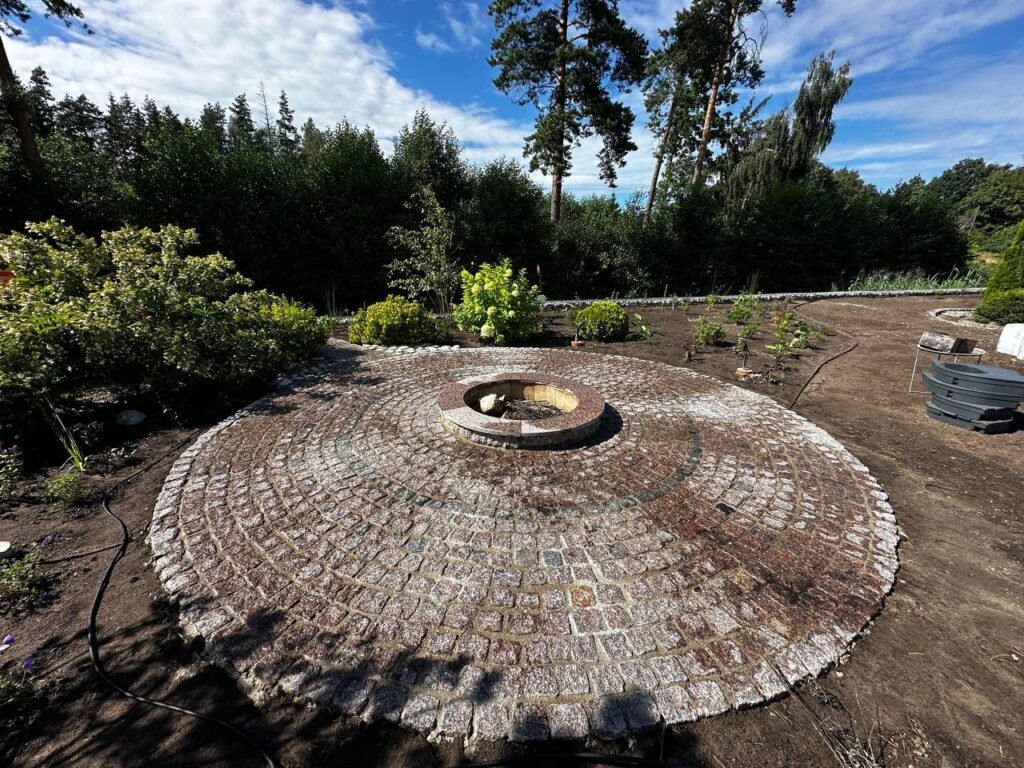
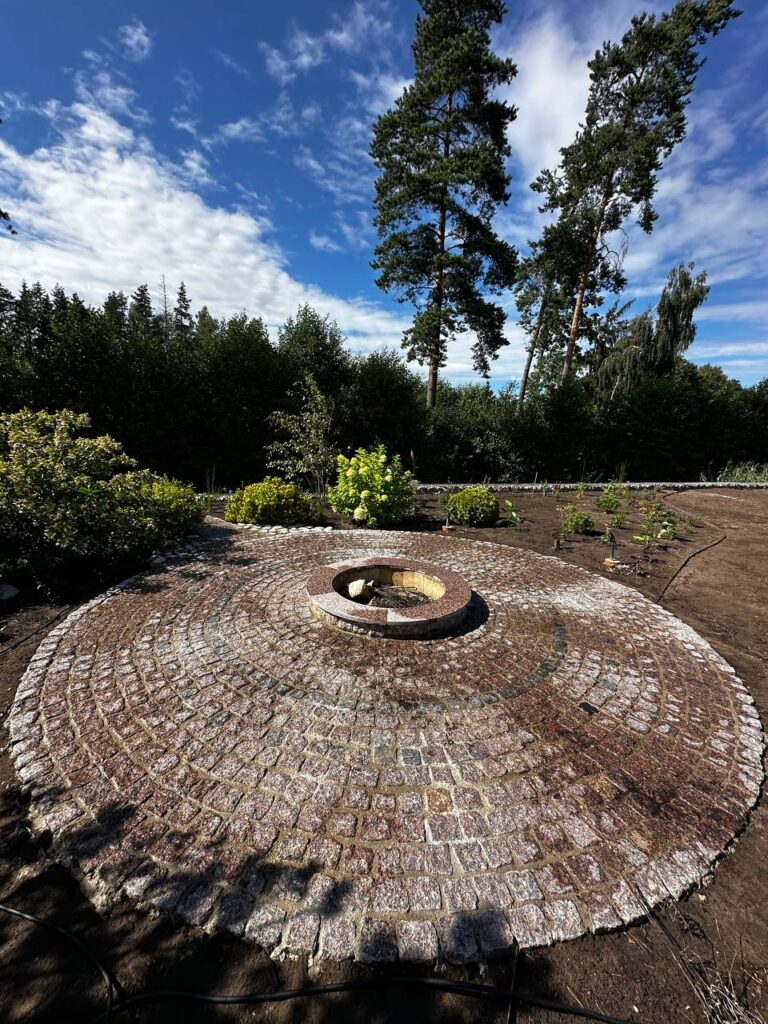
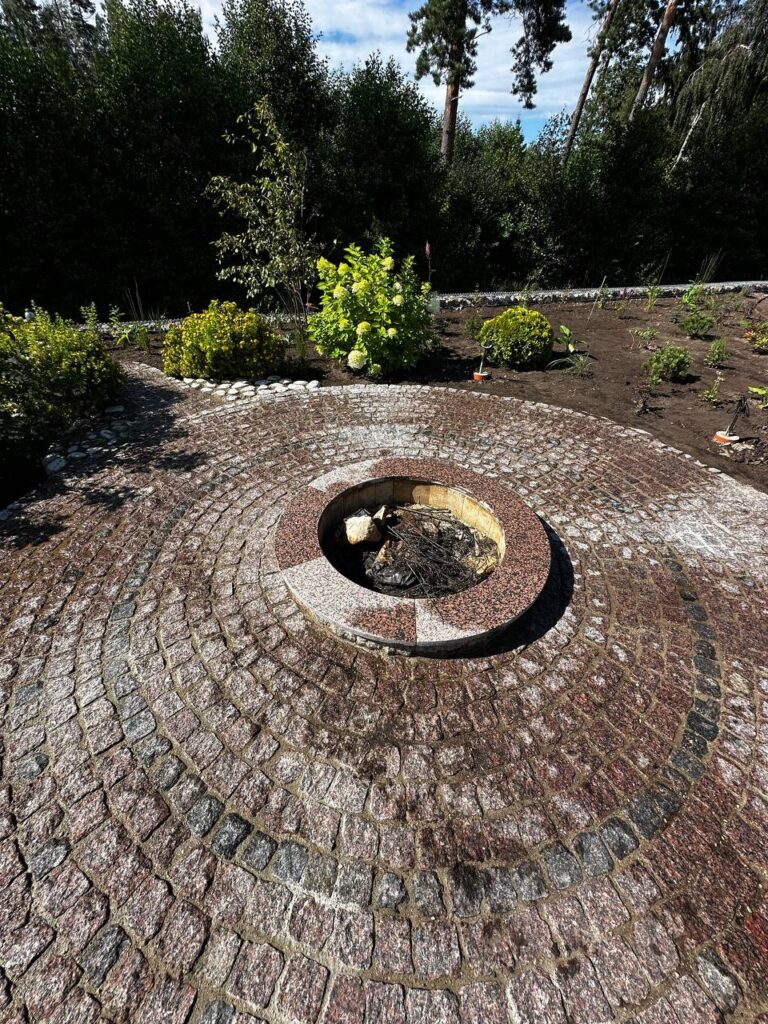
A circular area of granite setts with a fire ring at its centre. A small but highly visible piece of work, which we fit into the wider garden layout rather than adding as a separate element.
Edging and gravel strips
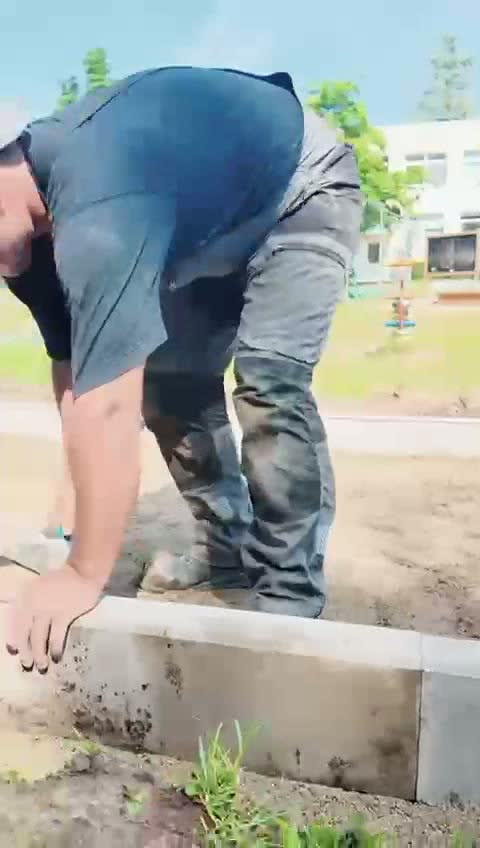
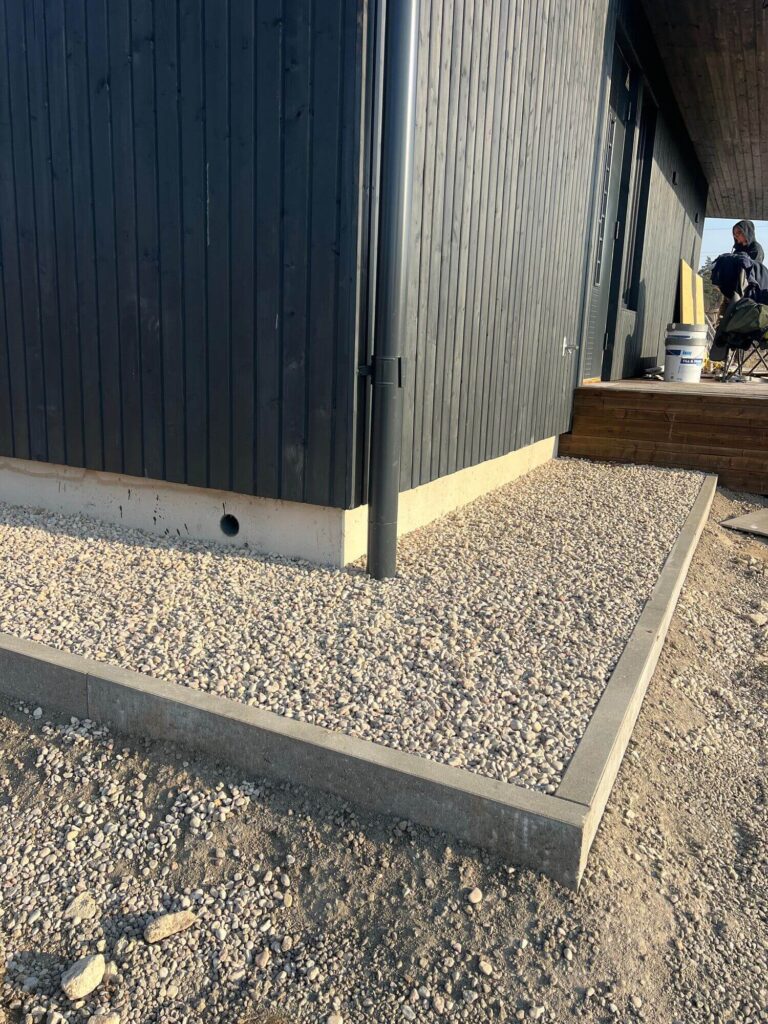
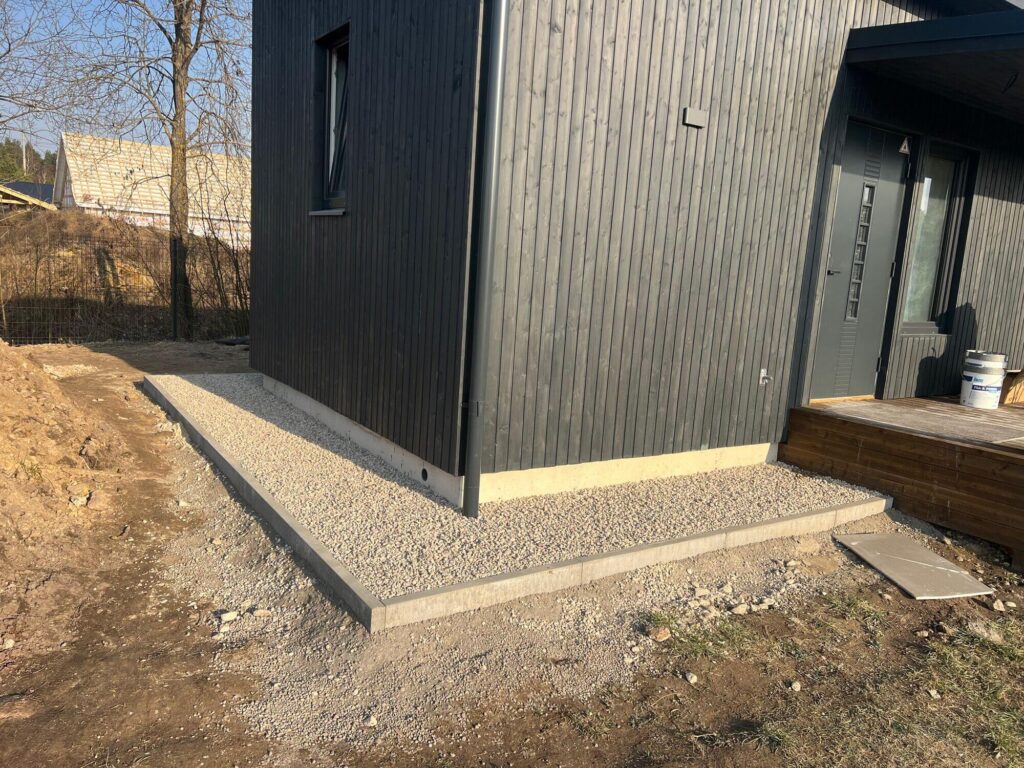
Concrete and fieldstone kerbs that hold the edges of lawn and beds, and crushed stone strips along house foundations. These are the elements that decide whether a site keeps its shape or spreads over the years.
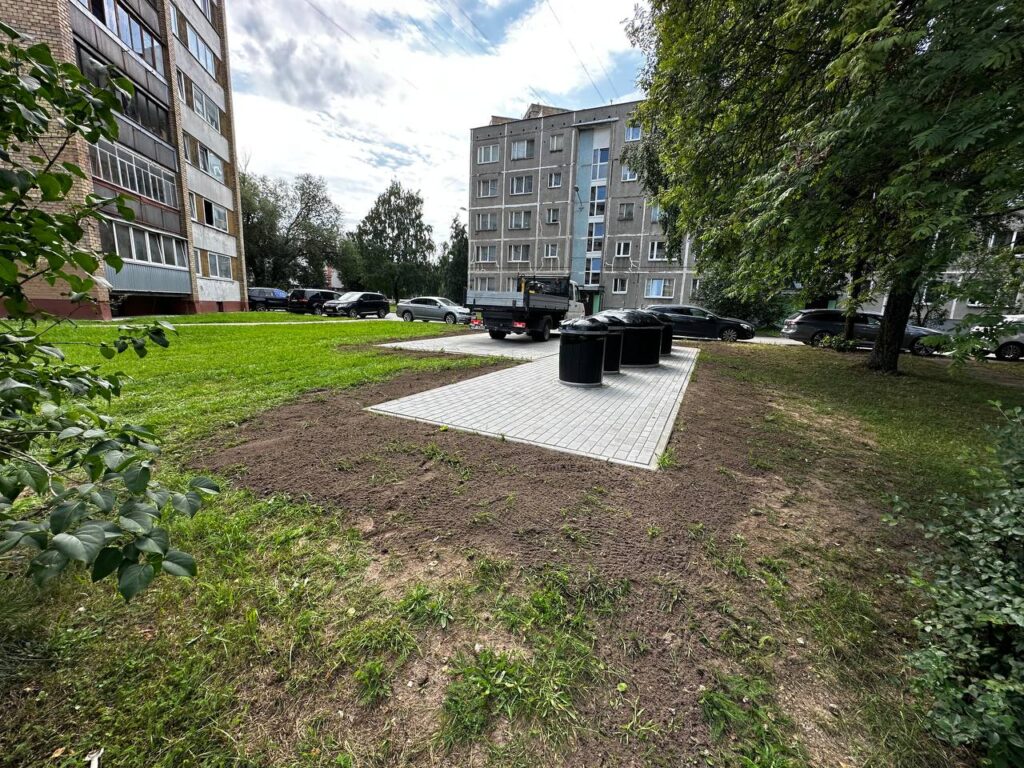
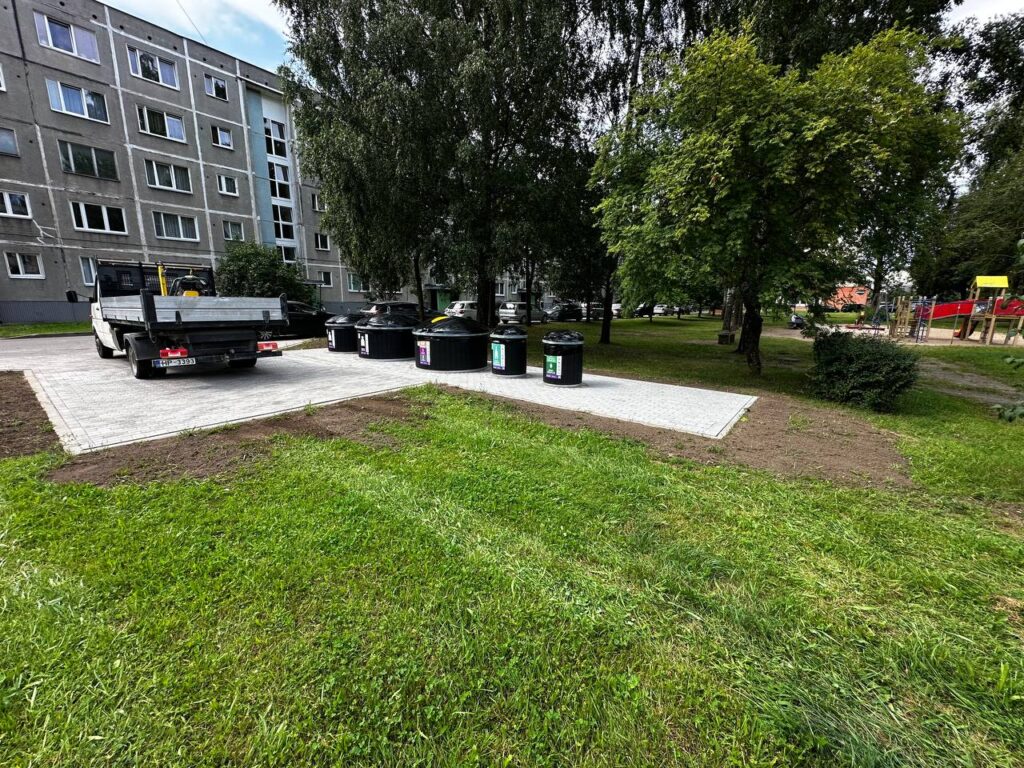
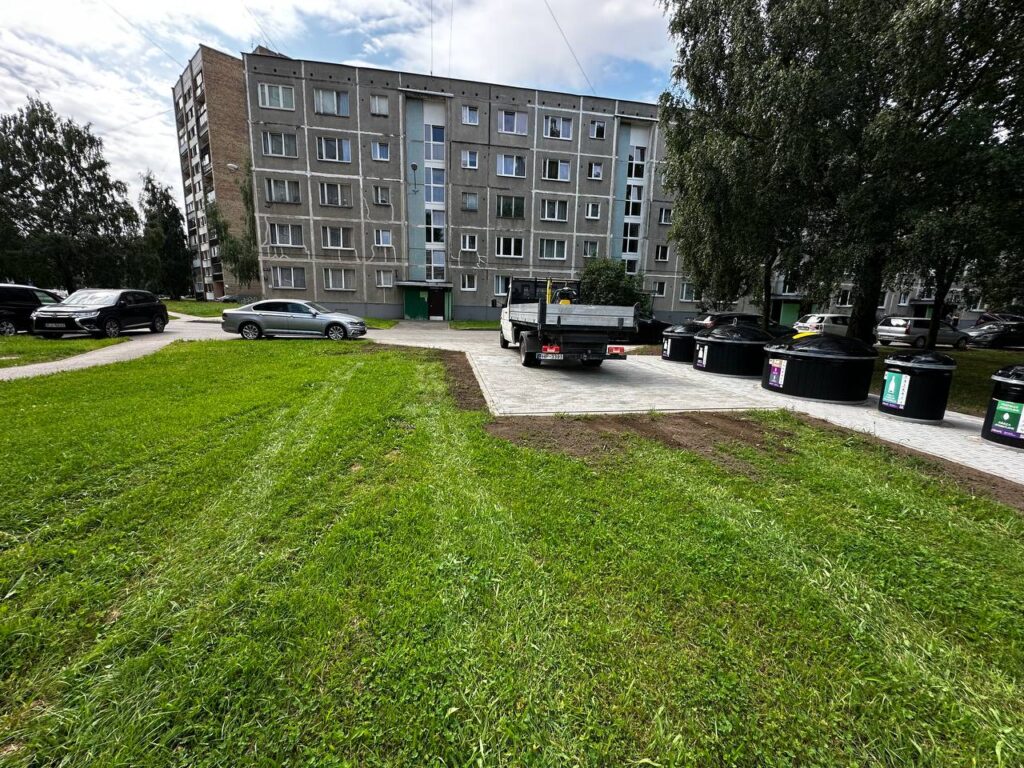
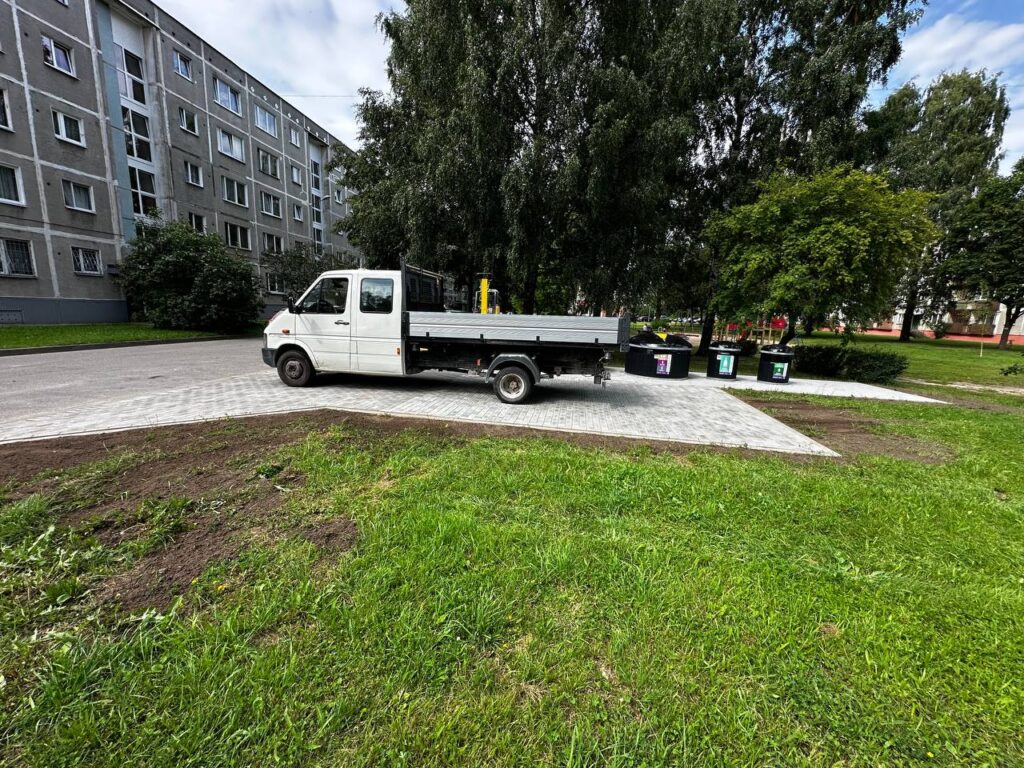
Completed landscaping work
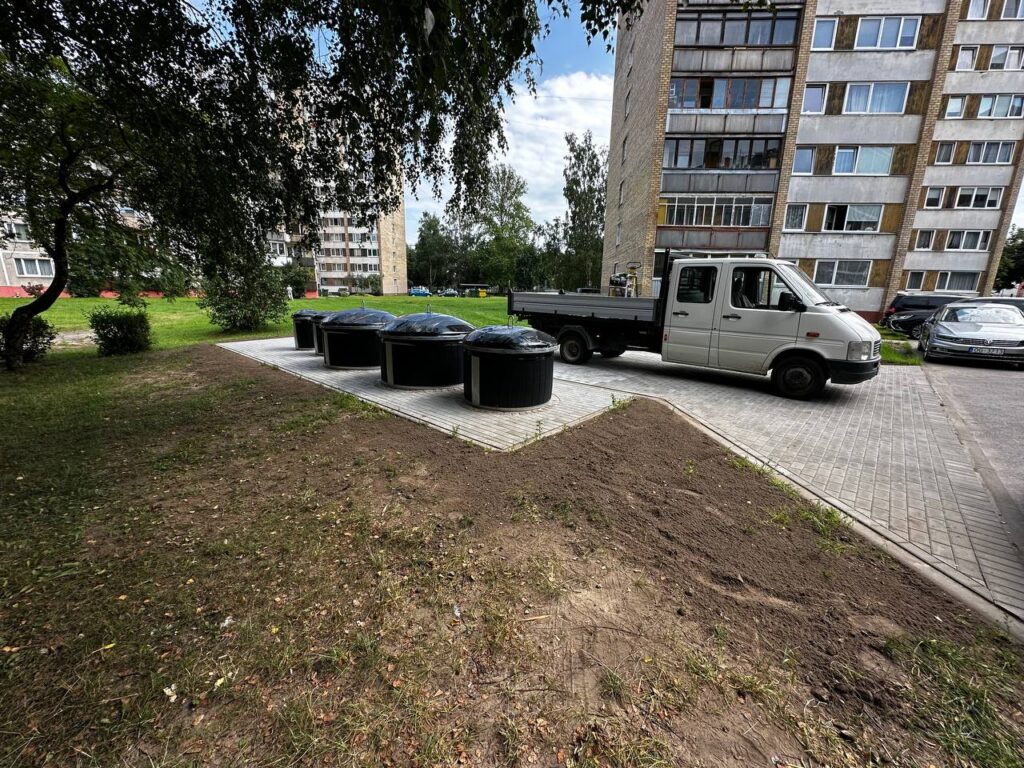
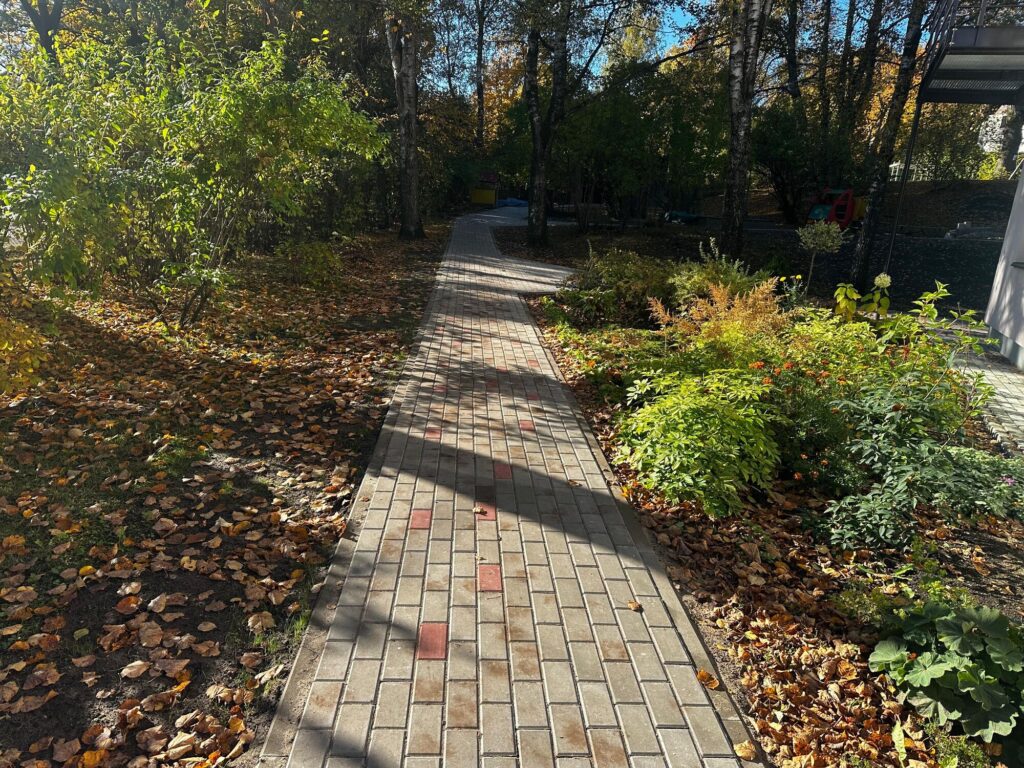
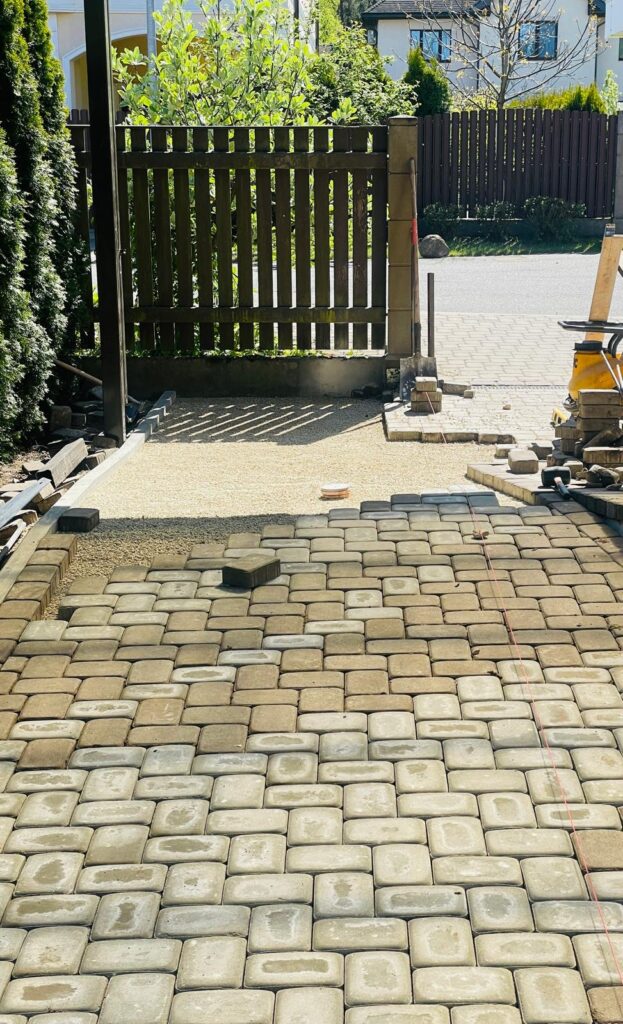
Every photograph is a site we built ourselves in Latvia.
Where we work
Private properties are the bulk of our landscaping work: the ground around a new house left uneven after construction, or an older site where water collects in the wrong places.
On apartment block and commercial sites there is the added question of pedestrian flow, machine access and the fact that the work happens while the site stays in use. In those cases we phase the work.
We work across Latvia. Most of our sites are in Riga and the surrounding region, including Jaunmārupe and Carnikava, as well as the Bauska and Iecava areas. Completed work is in the project gallery, and paving has its own section.
What drives the cost
The price of landscaping is set not by area alone, but by how much has to be done to the ground.
The largest factors are the height differences and how much soil has to be moved; whether surface water has to be dealt with and how involved the solution is; the condition of the soil and how much topsoil has to be brought in; the type of lawn; and whether the site includes gabions, a terrace or edging.
As with paving, we prepare a quote after visiting the site. The quote sets out earthworks, drainage, soil and planting separately rather than as a single figure.
Frequently asked questions
Can landscaping be ordered without paving?
Yes. We are often called to sites where the surface already exists but water collects, the levels are uneven or the lawn will not grow. In those cases we work only with the ground, the drainage and the planting.
How is landscaping different from a garden design project?
Garden design is a drawing and a plant selection. Landscaping is carrying it out in the ground: levels, drainage, soil, edging and surfaces. If you already have a design, we build to it. If not, we propose a straightforward solution based on what the site actually needs.
Do you plant and lay lawn?
We establish lawn both by seeding and with turf, and we form planting beds and planting zones. Large or unusual plants are usually sourced from a nursery once agreed with you.
Why is a crushed stone strip needed along the foundations?
It carries rainwater away from the foundations and stops soil sitting directly against the wall. Without one, water off the roof lands on the lawn beside the foundations and over time produces damp in the wall and settlement along the house.
How long does a gabion wall last?
Gabion baskets are galvanised or polymer-coated steel, and a properly built wall lasts for decades. What matters is the base and whether the wall has been sized for the ground pressure it holds back. We assess that during the site visit.
What time of year is best for landscaping work?
Earthworks and drainage can be done from early spring to late autumn. For lawn and planting the better windows are spring and autumn, when the ground is moist and there is no heat. A lawn laid in midsummer will need considerably more watering.
Tell us about your site and we will prepare a quote.