
Paving across Latvia
We pave private yards, driveways and commercial parking areas. A team of certified road construction engineers with 12 years of experience.
What decides how long a paved surface lasts
The setts are the visible part, but what holds the surface is what sits underneath. Most of the damage we are later called to was not caused by the paving itself: it is settlement where the base was not compacted enough, and spread edges where there are no kerbs.
So every job starts with a survey. We assess the ground, the existing height points and which way the land falls. That determines the thickness of the base, the grade of aggregate, and whether the site needs drainage channels or linear drainage.
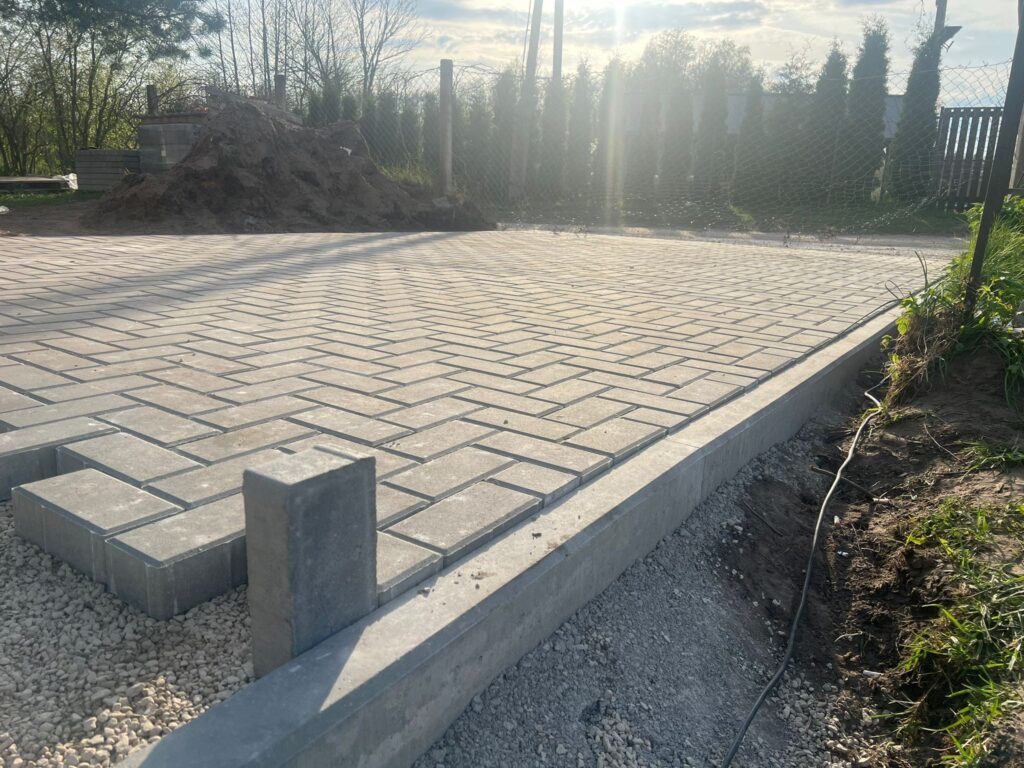
We build the base in layers and compact each one separately. Every surface is closed with kerbs, because without them the edges begin to spread, and sooner than most people expect. Once the setts are down we fill the joints and compact the area again.
The paving we work with
Concrete setts
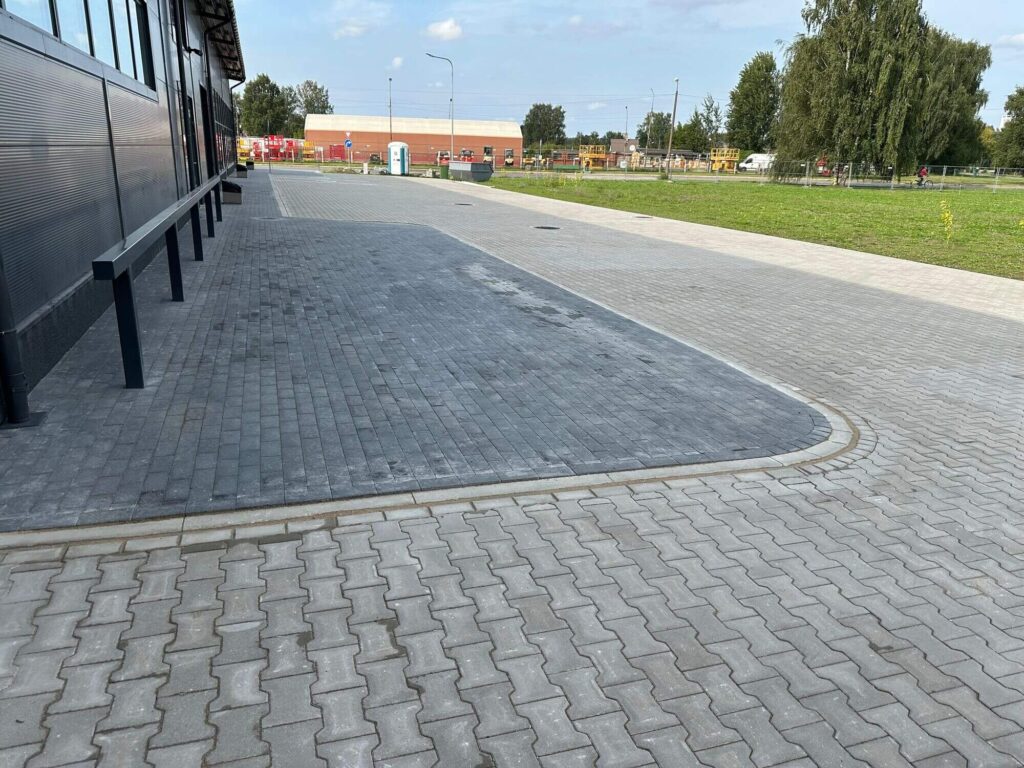
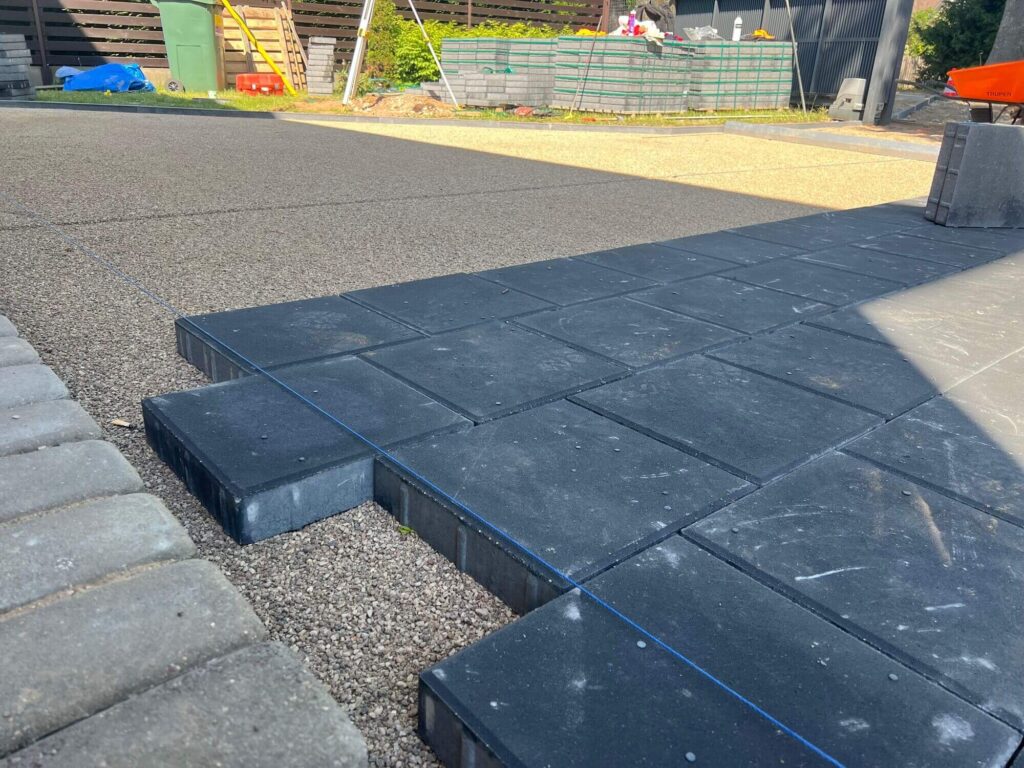
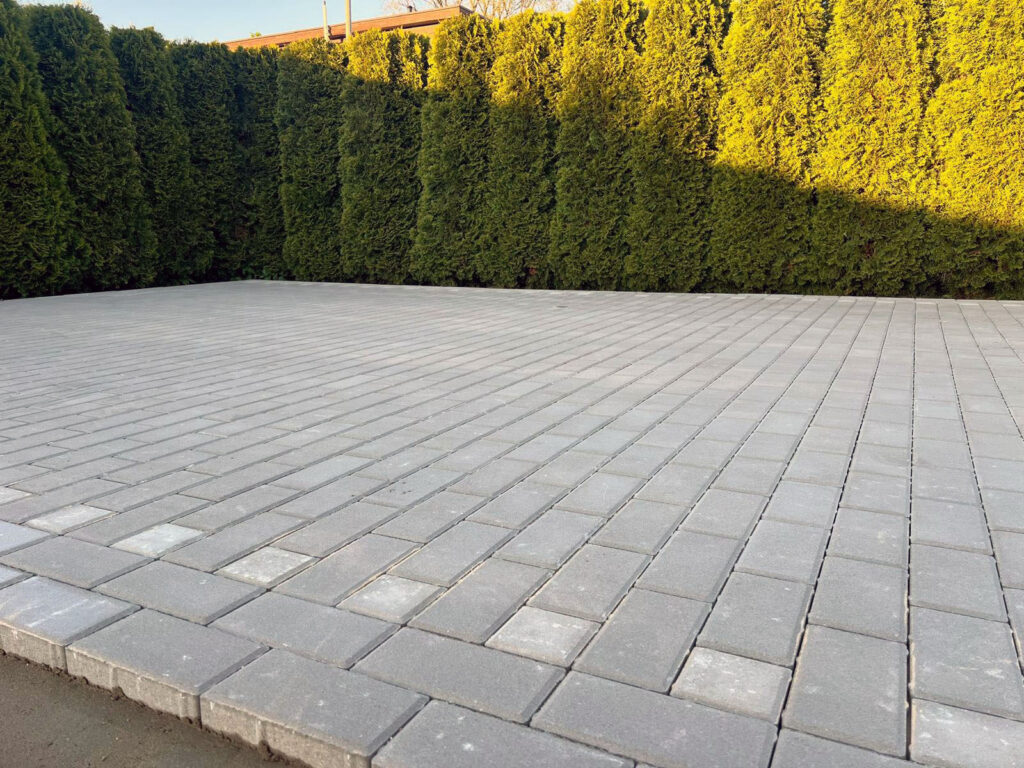
The most common choice for private and commercial sites: a wide range of shapes, thicknesses and tones with predictable geometry. The thicker setts carry heavy vehicle loads, so we use them in parking areas and driveways.
Clinker setts
Fired clay with a deep tone that barely changes over the years. Resistant to frost and salt. Often chosen in historic settings and wherever a warmer, redder surface is wanted.
Granite setts
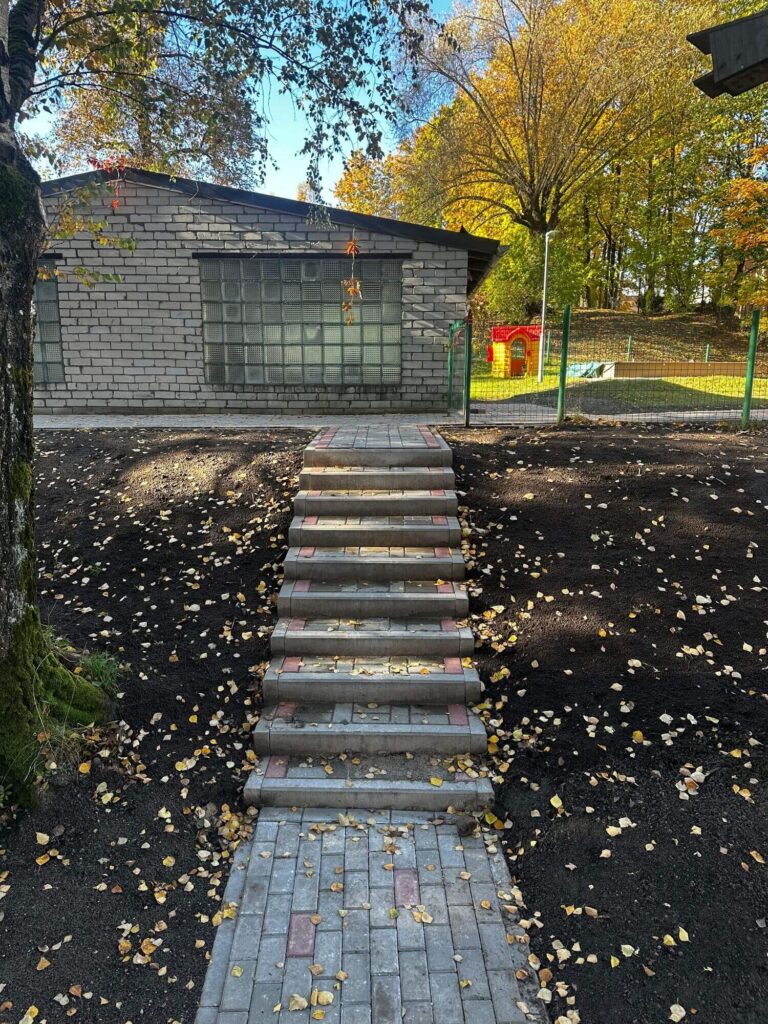
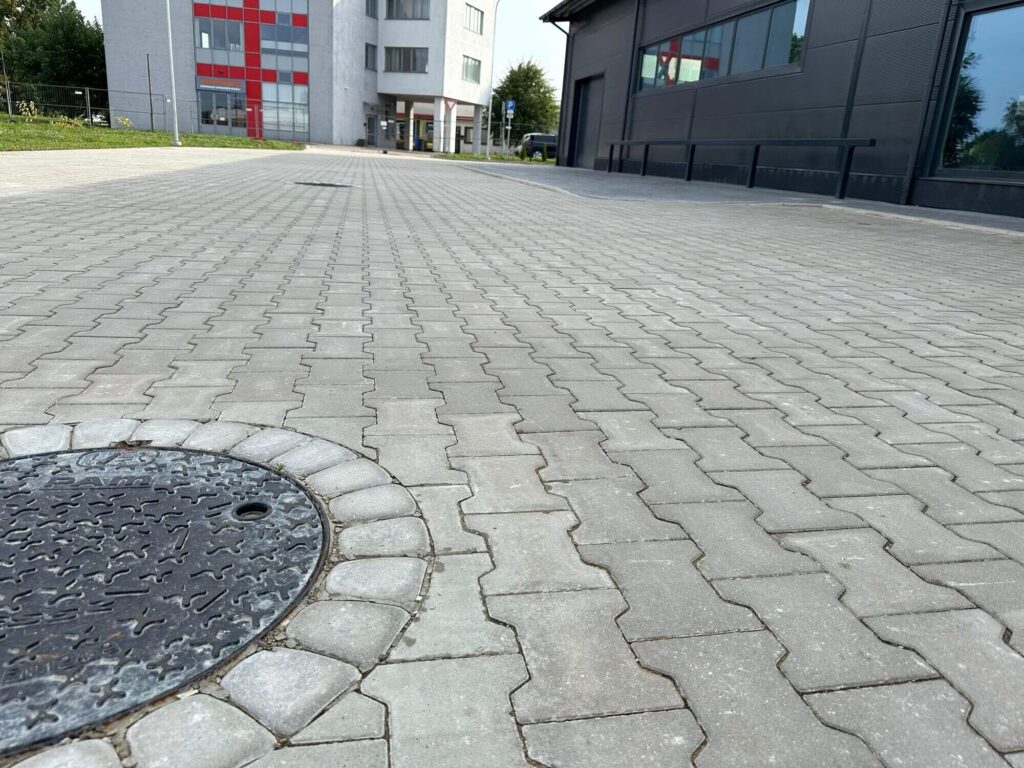
Natural stone with the longest service life: it carries heavy loads and does not wear down. We use it for steps, circular patterns, accent lines and anywhere a surface has to last decades without replacement.
Fieldstone
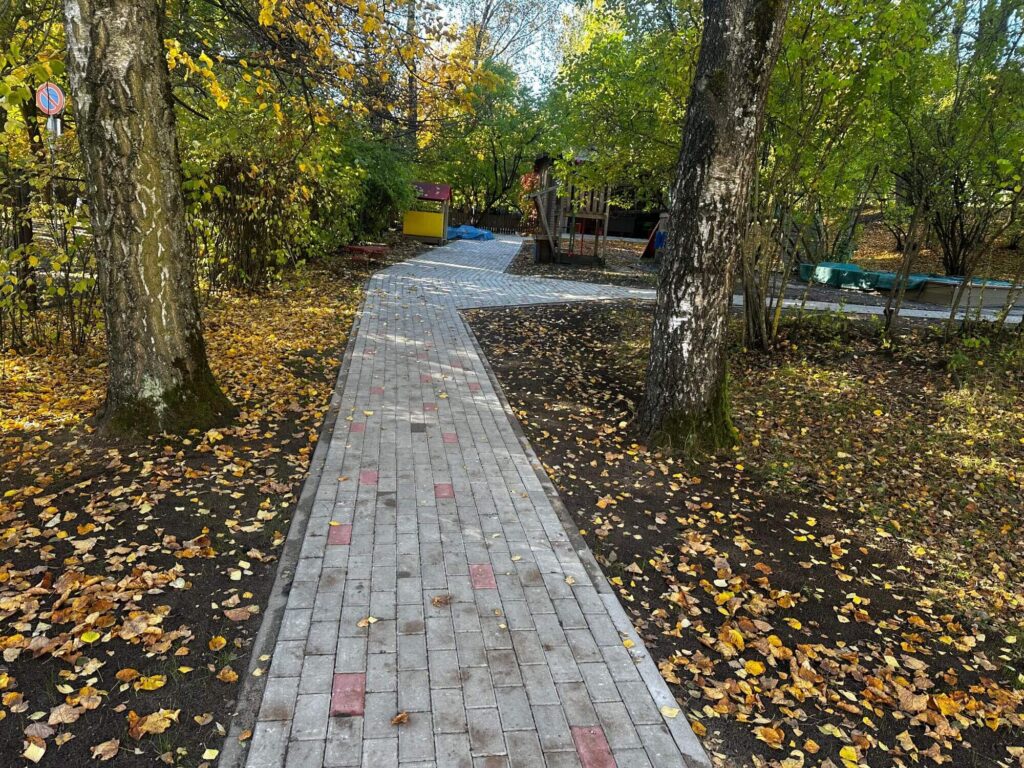
Split or rounded natural stone with a pronounced, uneven face. Suited to paths, edges and garden zones where a natural, less regular pattern is wanted.
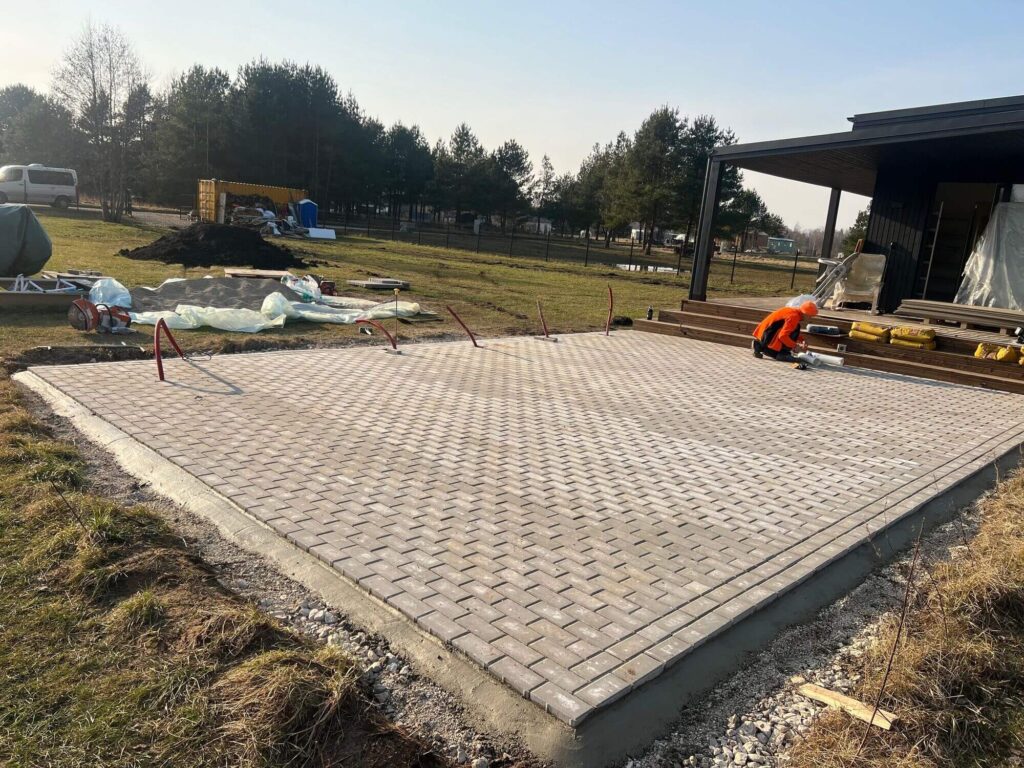
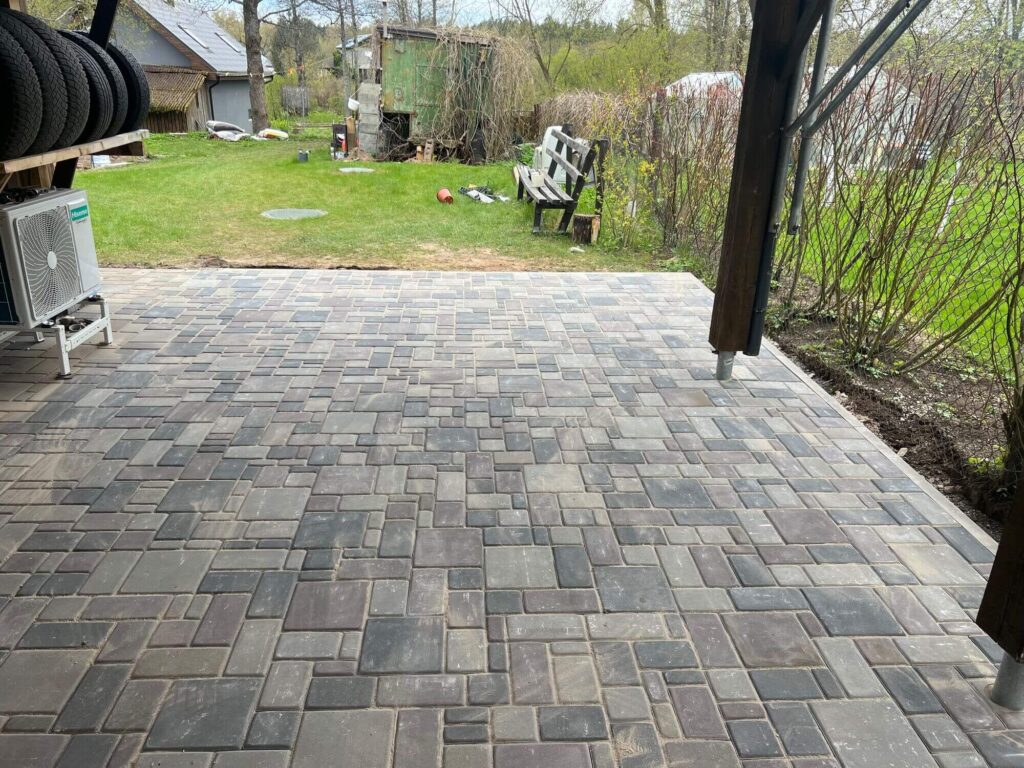
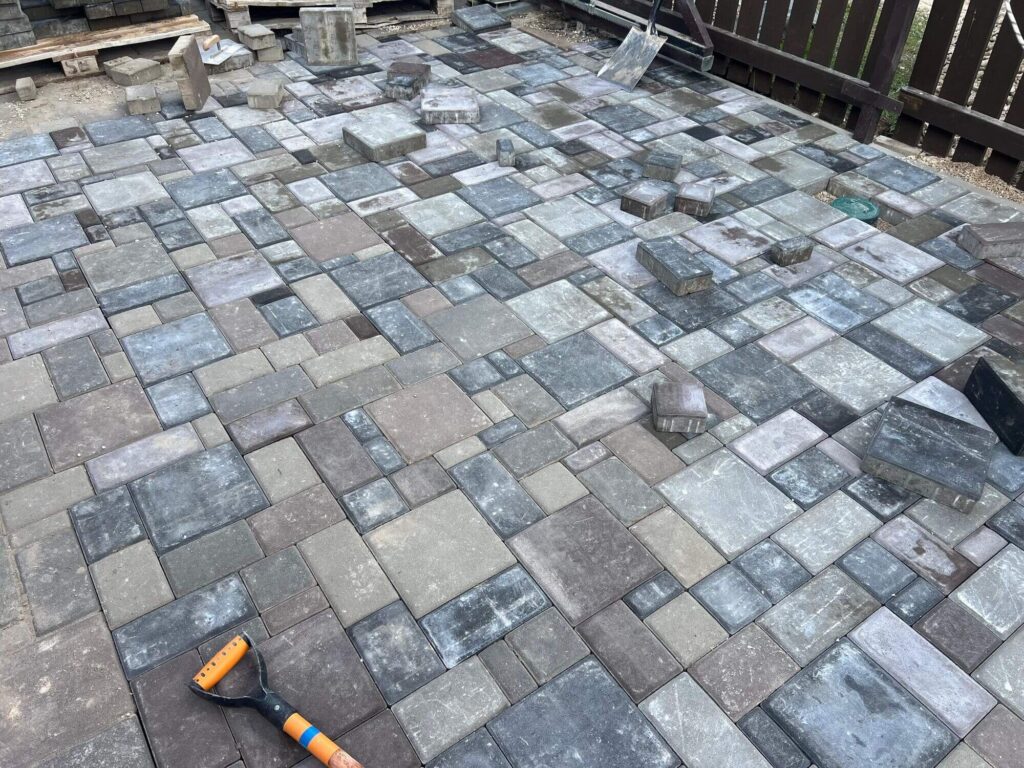
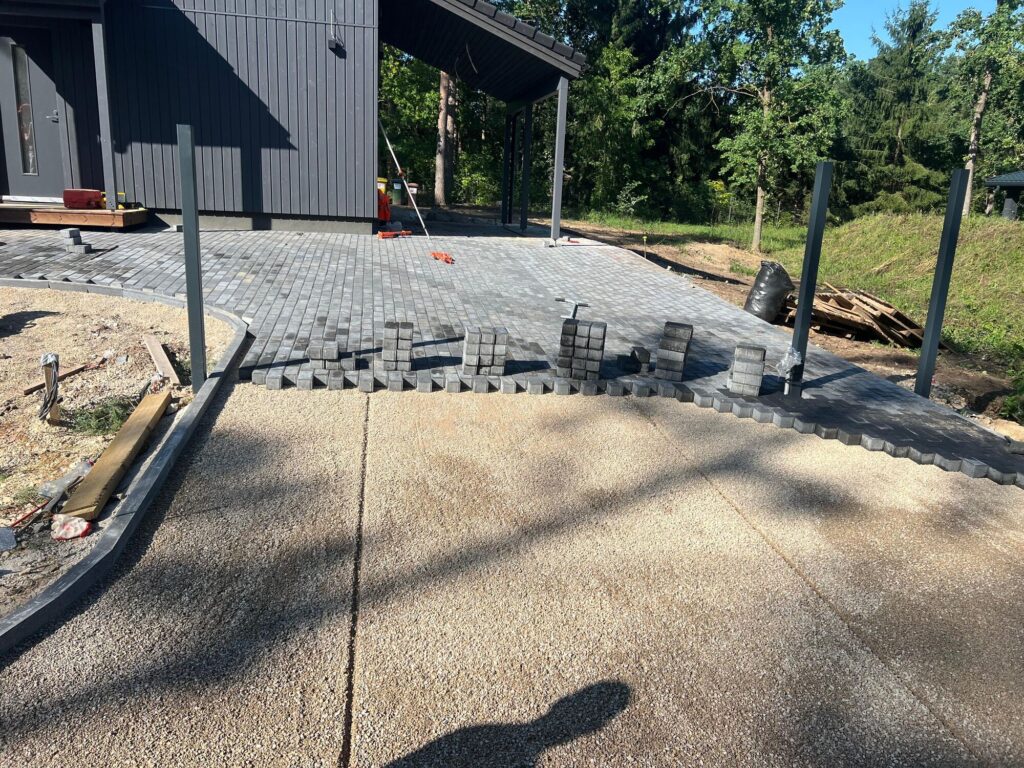
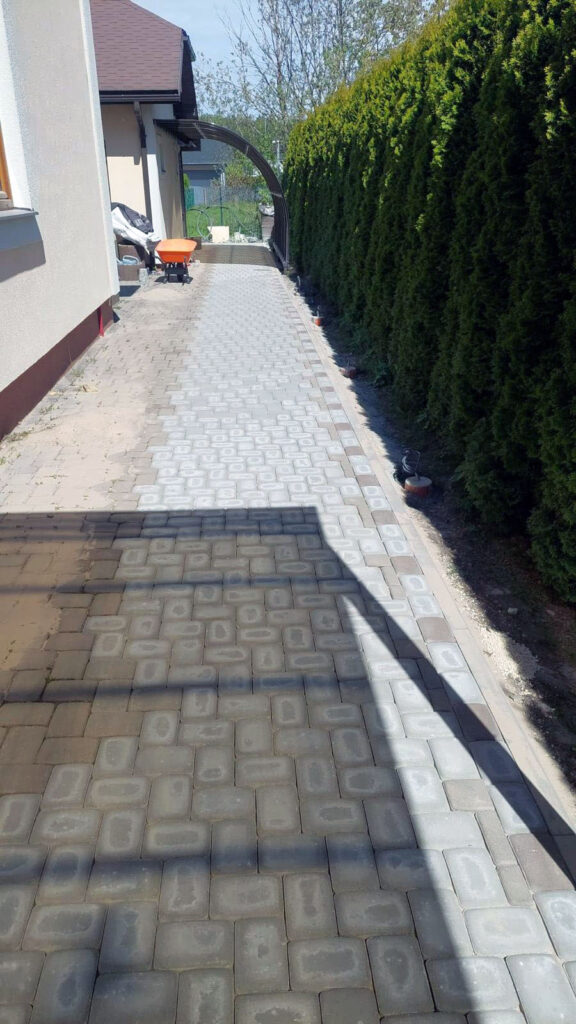
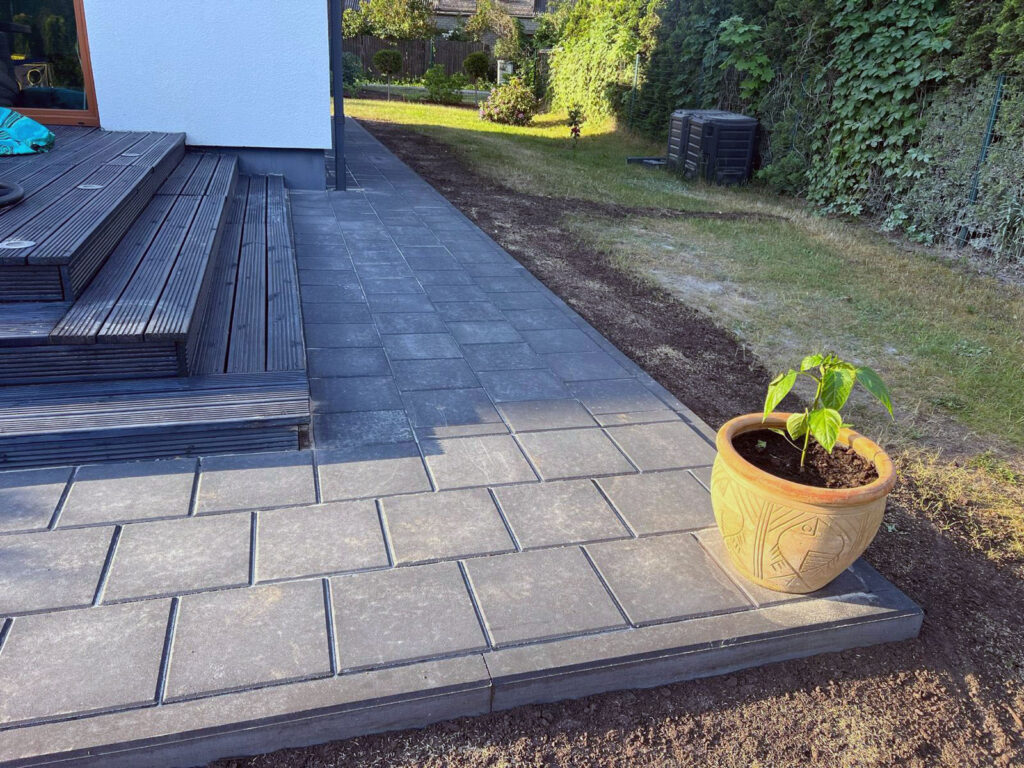
Completed paving work
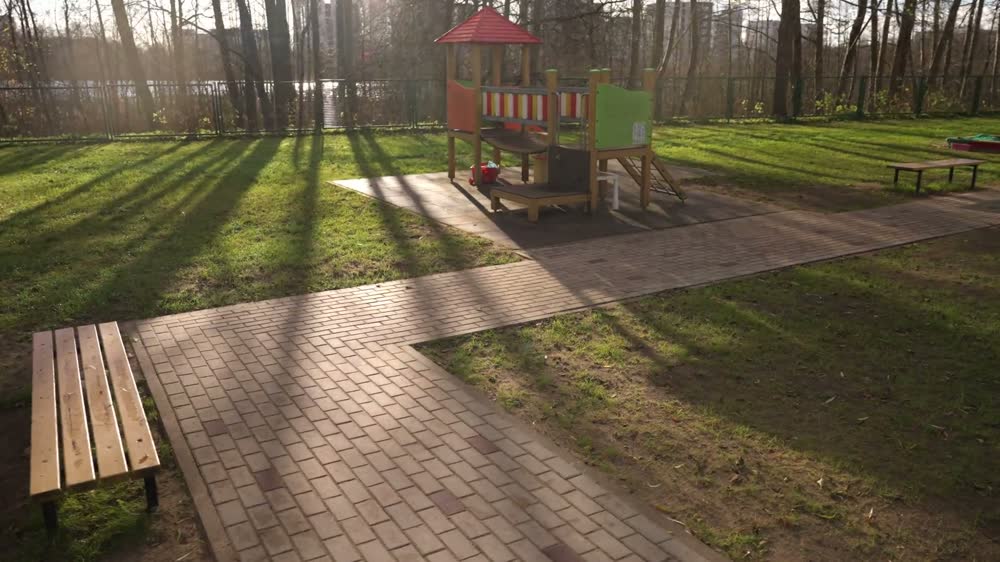
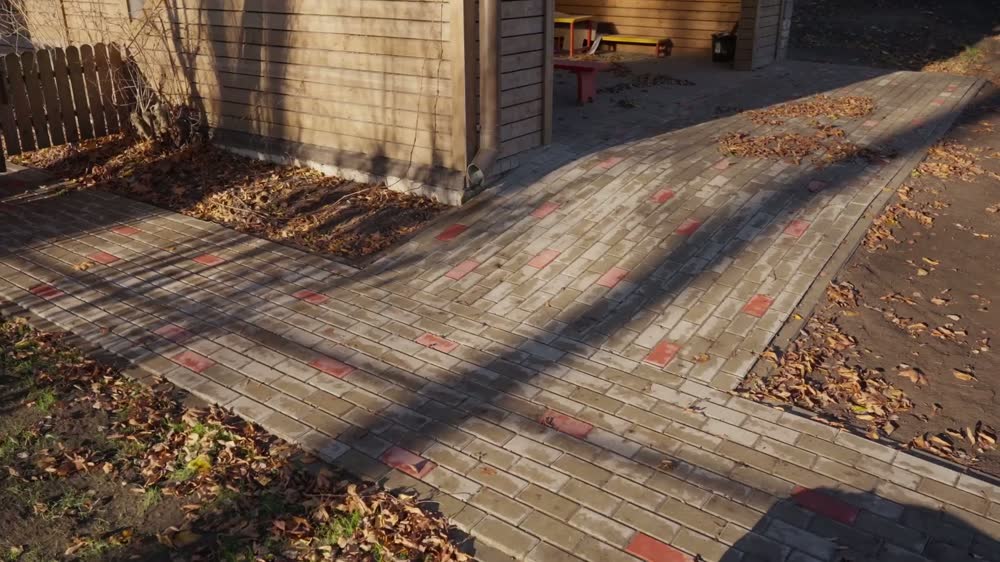
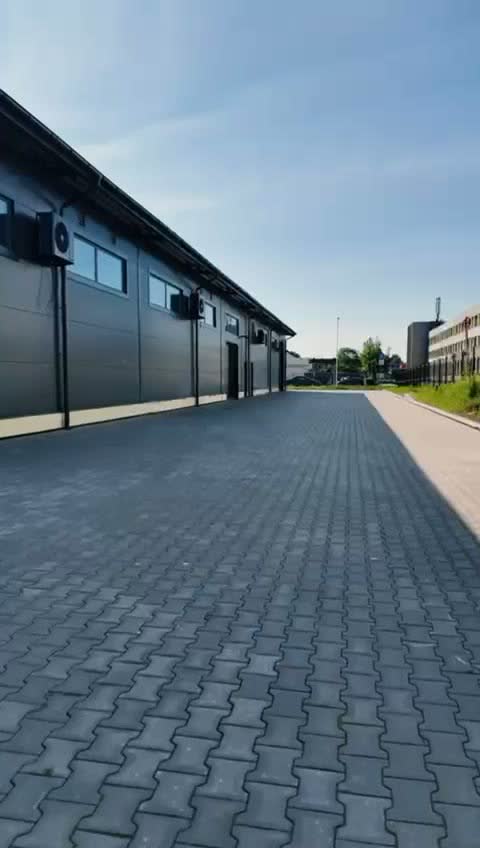
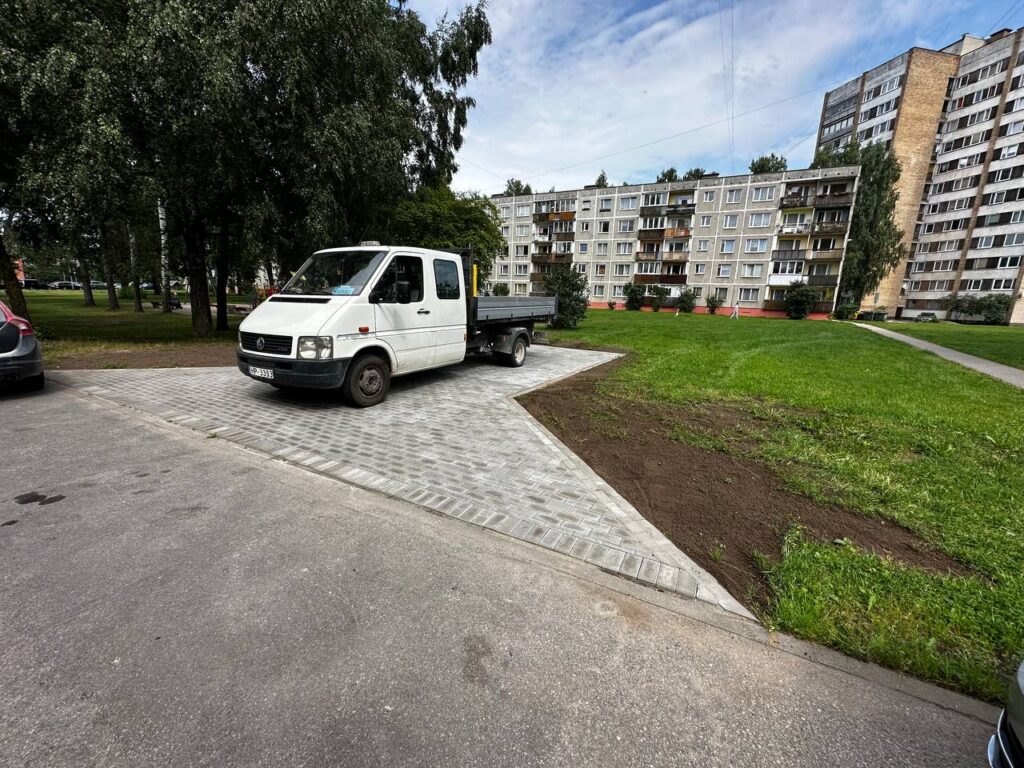
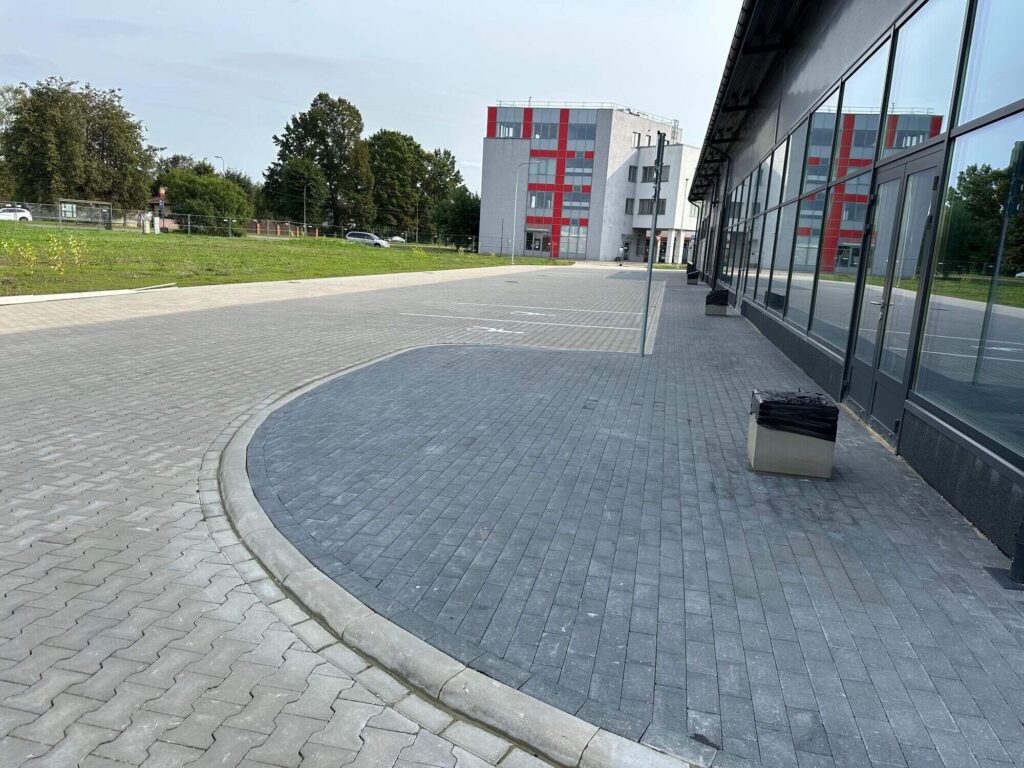
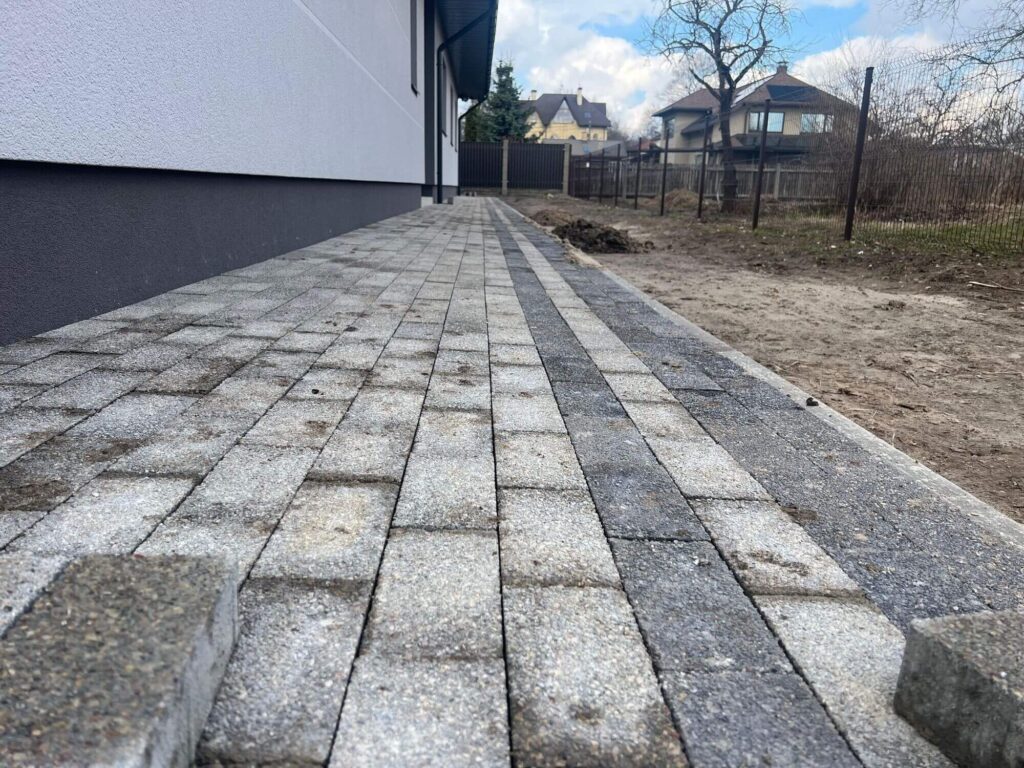
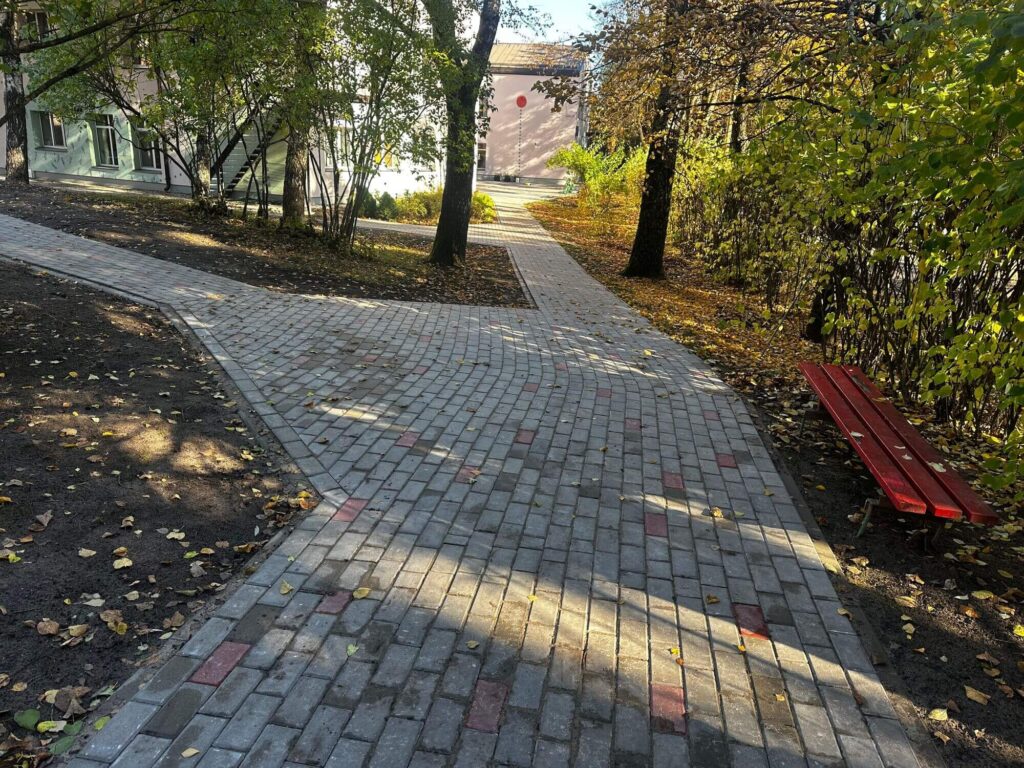
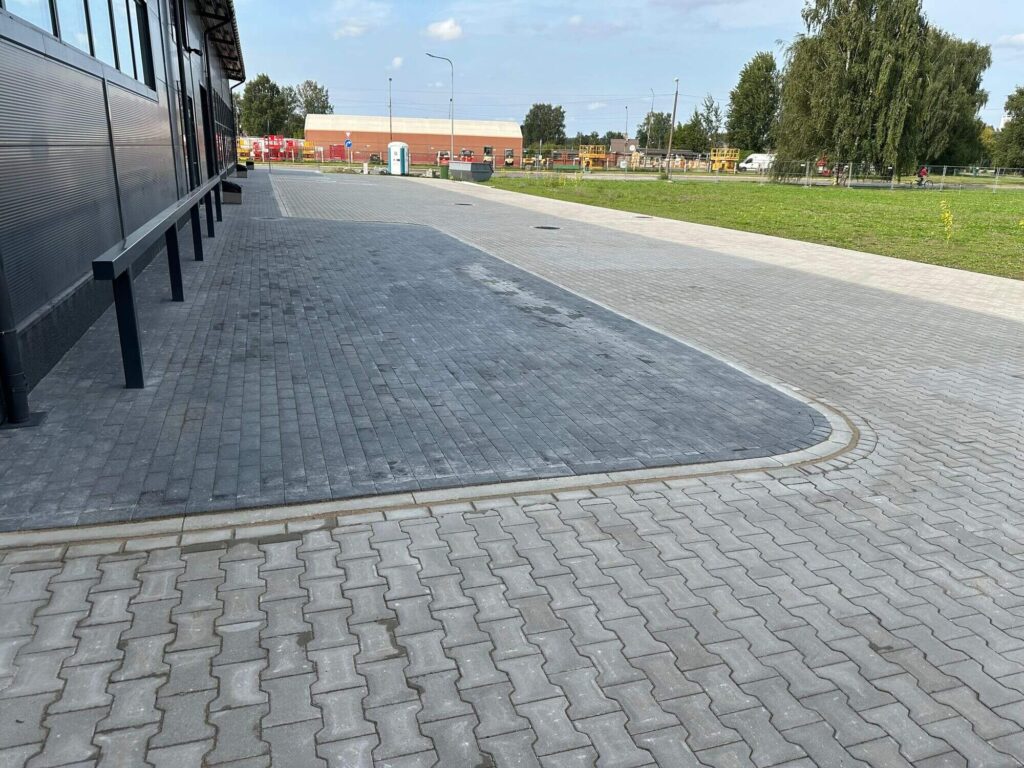
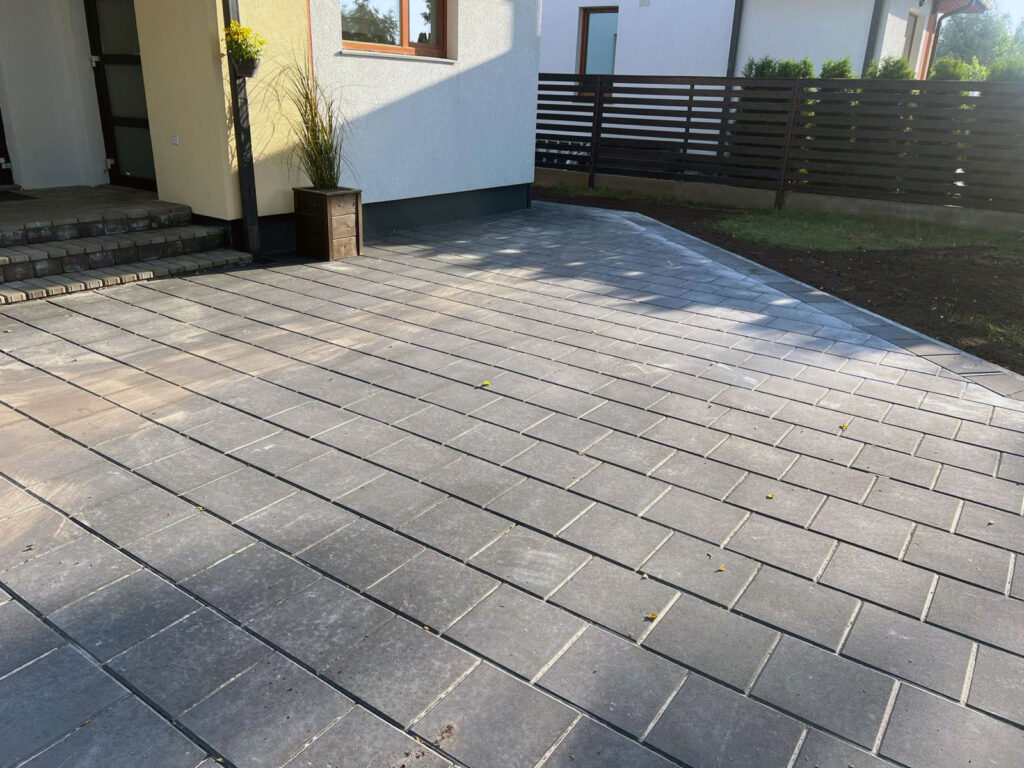
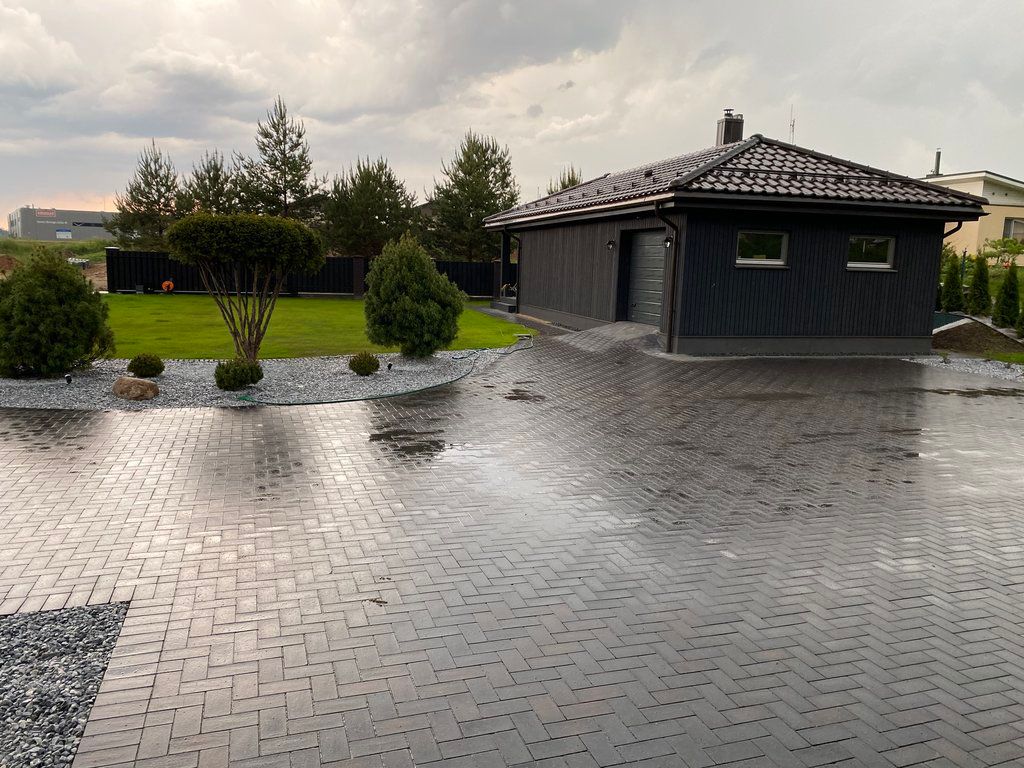
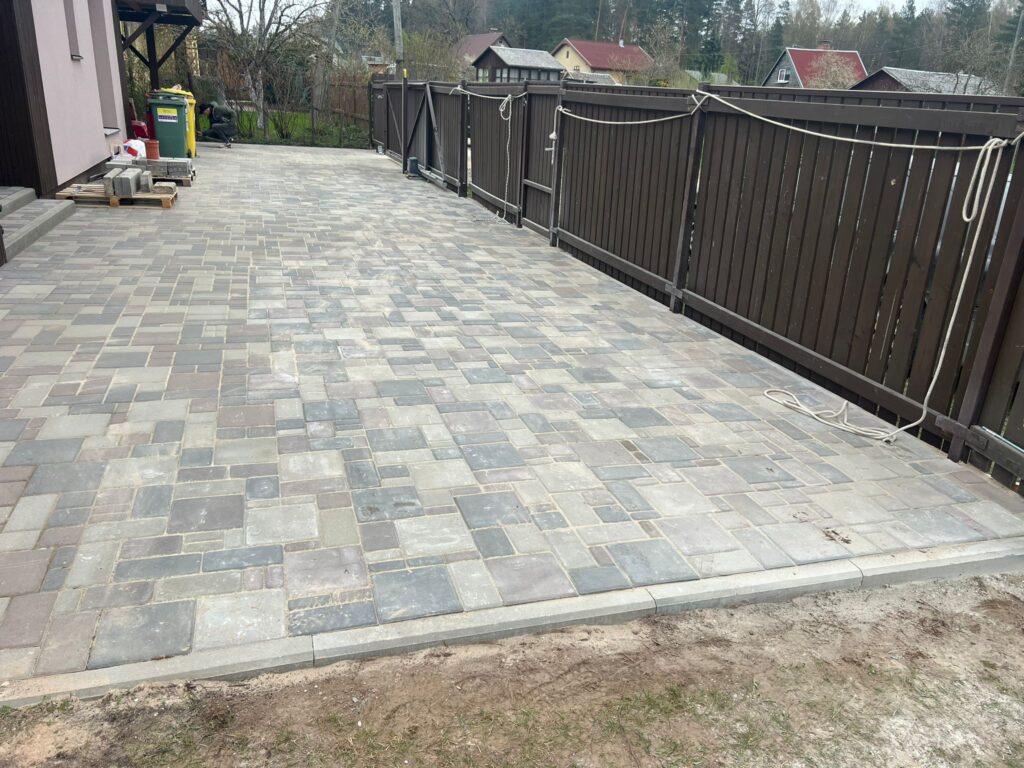
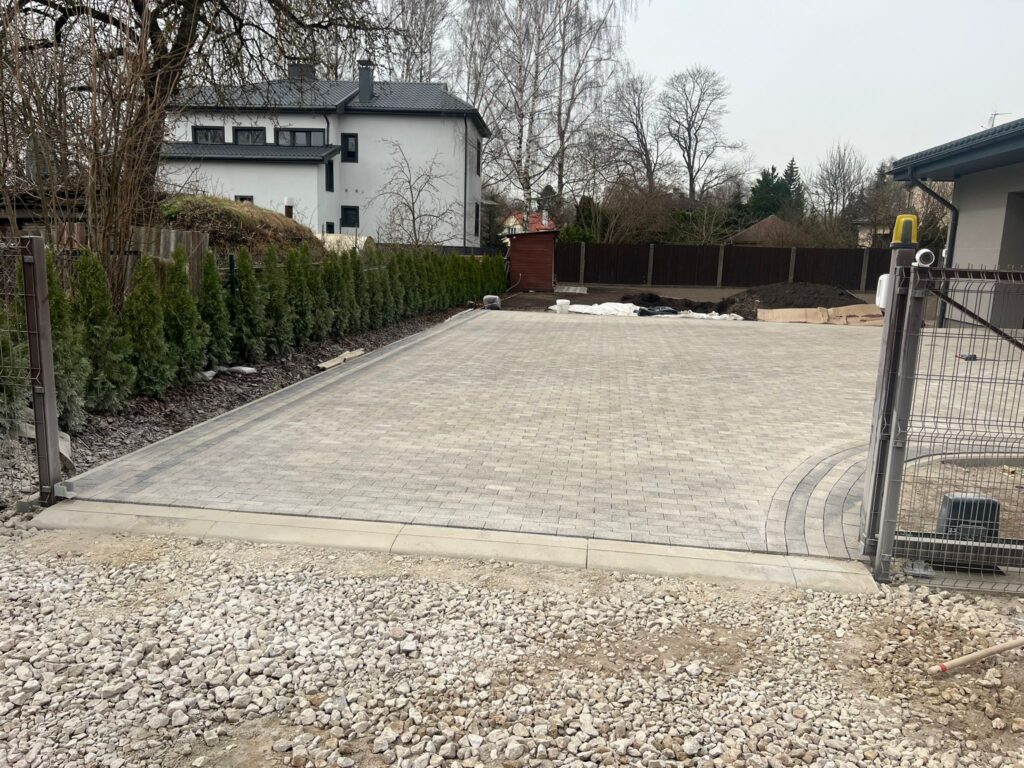
Every photograph is a site we built ourselves in Latvia.
Where we pave
Private yards and driveways are the bulk of our work: from the gate to the door of the house, with steps, kerbs and drainage that keeps water away from the foundations. We also pave terrace approaches, garden paths and fire pit areas.
On commercial sites the deciding factor is load. In parking areas, access roads and pedestrian zones crossed daily by heavy machinery we use a thicker base, harder-wearing setts and linear drainage. In apartment block yards we regularly build semi-underground waste container areas as well.
We work across Latvia. Most of our sites are in Riga and the surrounding region, including Jaunmārupe and Carnikava, as well as the Bauska and Iecava areas. Completed work is in the project gallery, and the other services are on the services page.
What drives the cost
It is not honest to quote a price per square metre without seeing the site, because most of the cost is decided not by the setts but by what has to be done before they are laid.
The largest factors are the area and its shape, since complicated edges and a lot of cutting take more work than a rectangle; the bearing capacity of the existing ground, which sets the thickness of the base; the height differences and how much soil has to be moved; the drainage solution; and the type of setts, where the gap between concrete and granite is substantial.
So the order is this: we come out to look at the site, then prepare a quote with a defined scope of work. The quote shows the base, the setts, and the kerbs and drainage separately rather than as a single figure.
Frequently asked questions
How thick is the base under paving?
It depends on the load and the ground. A footpath usually needs a thinner layer of aggregate, while a driveway or parking area needs a considerably thicker base compacted in several layers. We set the exact thickness after the survey, because it depends on how much the existing ground will carry.
What is the difference between concrete and granite setts?
Concrete is cheaper, comes in a wider range of shapes and tones, and has predictable geometry. Granite is natural stone: more expensive, but it barely wears and lasts considerably longer. We often combine them, laying the area in concrete and forming the steps and accent lines in granite.
How long does it take to pave a yard?
A small private yard is usually a few weeks of work if the weather holds. What drives the schedule is not the laying itself but building the base and the drainage. We include a specific programme in the quote.
Where does the rainwater go?
We plan the drainage before work starts. The area is given a fall towards somewhere the water can go, and where necessary we build drainage channels or linear drainage. This is one of the most common reasons older surfaces begin to settle.
Can old setts be lifted and relaid?
Often yes, granite and clinker in particular. We lift the setts, build a new base and lay them back. With concrete it depends on how far the surface has worn or crumbled. We assess that during the site visit.
Tell us about your site and we will prepare a quote.